
It’s weird being the only one not drinking. Even weirder? Realizing how normal that weirdness actually is. If you’re young, sober, and stuck feeling like the odd one out, you’re not broken—you’re just ahead of the curve. Early recovery isn’t some Instagram glow-up montage. It’s mostly you, turning down a drink and wondering if you’re the only one who feels this way. You’re not.
Here’s what nobody tells you at the start—and why addiction treatment in Hilliard might be the most normalizing thing you ever do.
1. “Fun” Looks Different for Everyone—And That’s Okay
Before sobriety, “fun” might’ve looked like shots, blackouts, blurry hookups, and group photos you don’t remember posing for. Without that script, fun can feel foreign. But here’s the kicker: most people aren’t actually having as much fun as they pretend to.
You’re not missing out—you’re waking up. Real fun starts when you can remember it, when your laugh is real, and when you’re not low-key panicking about what you did the night before.
“At first, I thought being sober meant sitting in a corner while everyone else danced. But I started noticing who was actually having a good time and who was just trying not to feel.”
– Sober Peer, 22
2. You Might Mourn the Party Version of You
There’s a version of you that could walk into a party, crack a joke, flirt like it’s a sport, and keep the energy going all night. Losing that version can feel like a death. But here’s the truth: that “life of the party” persona wasn’t free. It cost you your peace, your clarity, and often, your self-respect.
Grieve that version. Then make room for the one who shows up without needing a buzz to belong.
3. Cringe Happens—You’ll Survive
There’s no way around it: you’re going to have awkward conversations. You’ll turn down drinks and get side-eyed. Someone will ask if you’re pregnant (yes, really). People will offer you substances like they’re sharing gum.
It’s uncomfortable. But it passes. And eventually, you start caring less. Not because you become emotionally invincible—but because you stop making their discomfort your problem.
4. Addiction Treatment Doesn’t Mean You Failed
You’re young. Maybe you haven’t hit “rock bottom.” Maybe you still have your job, your grades, your friendships. That doesn’t mean you don’t deserve help. Addiction treatment isn’t just for people with nothing left. It’s for anyone tired of living like this.
In treatment, you meet people who speak your language. Who don’t make you explain why you’re tired of drinking. Who know what it feels like to want more out of life, even if you don’t know what “more” looks like yet.
“I thought treatment was going to be some big intervention moment. It wasn’t. It was the first time I felt safe enough to say, ‘I’m not okay.’”
– Outpatient Client, 2023
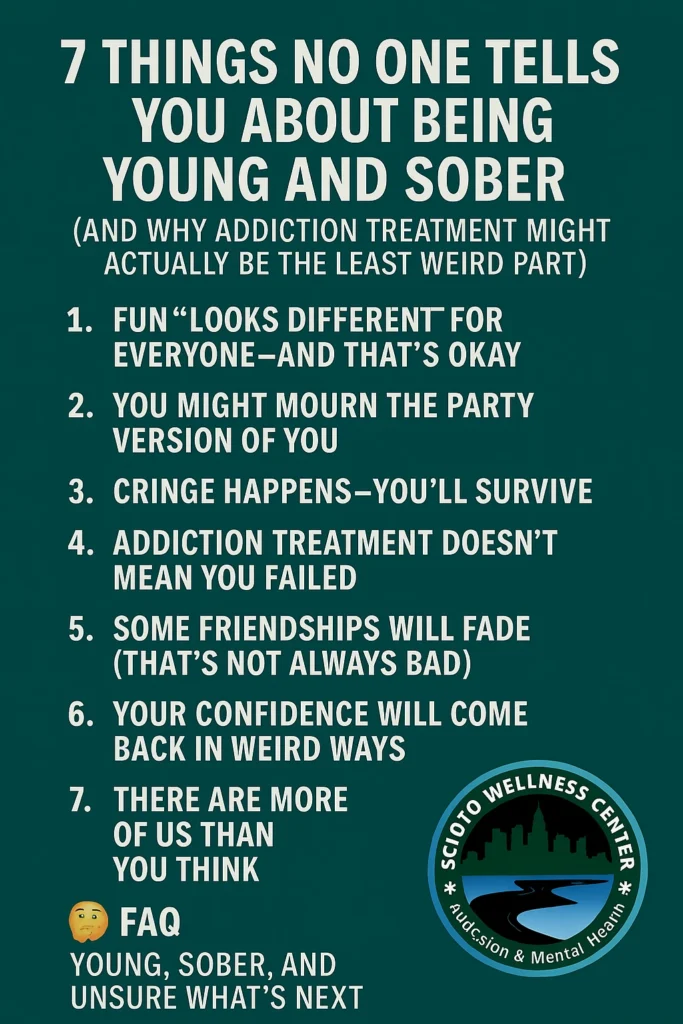
5. Some Friendships Will Fade (That’s Not Always Bad)
Letting go of drinking sometimes means letting go of the people who only knew how to drink with you. That can hurt. But not all friendships are built to last forever. Some are built to survive a Friday night.
Losing those bonds clears the path for ones with more depth. People who remember what you said. Who check in the next day. Who celebrate your wins without needing a buzz to do it.
6. Your Confidence Will Come Back in Weird Ways
It won’t be overnight. But one day, you’ll realize you just danced sober. Or you had a hard conversation without spiraling. Or you didn’t leave a date feeling ashamed or half-remembered. These are your wins now.
Confidence in sobriety isn’t flashy. It’s slow, sturdy, and unshakable. It’s waking up knowing who you are—even if you’re still figuring it out.
7. There Are More of Us Than You Think
You’re not the only one rethinking the way things have always been. Whether it’s through therapy, harm reduction, or full-on treatment, more young people are ditching substances and building something better. Quietly, but collectively.
You’re not weird. You’re just doing the brave thing out loud.
FAQ: Young, Sober, and Unsure What’s Next
Is addiction treatment only for people with severe substance issues?
Not at all. Many people enter treatment because they’re tired of the cycle—not because they’ve hit a dramatic low. If you’re questioning your relationship with substances, Scioto Wellness Center’s addiction treatment in Hilliard can help you find clarity, not judgment.
What if I’m not sure I even need treatment?
That’s okay. You don’t need to be sure to explore your options. A lot of young people feel that way at first. The best programs help you figure out what’s actually going on beneath the surface—without forcing you into a label.
Will I be the youngest person in treatment?
Maybe. Maybe not. Many programs, especially outpatient ones like those at Scioto, serve a mix of ages. But what matters most is fit—not age. If you’re looking for peers, ask about group options designed for young adults.
What if I try it and still feel weird?
That’s normal. Early sobriety is weird. But over time, it gets less weird—and more real. And honestly? Most people in treatment felt like outsiders before they walked in. The difference is, now you’ll be surrounded by people who get it.
📞 Ready to Feel a Little Less Alone?
Call (888) 351-9849 or visit to learn more about our addiction treatment services in Hilliard, Ohio. Whether you’re just curious or seriously considering help, we’ll meet you where you are.