

The Weight You Can’t See
I used to think anxiety was just thoughts—nervous energy, overthinking, maybe a racing mind. But what really caught me off guard were the body symptoms. My jaw would clench so tight I’d get headaches. My chest would squeeze like I’d run a mile even though I hadn’t moved. I’d wake up drenched in sweat without even remembering a dream. At one point, I was convinced something was medically wrong with me.
Turns out, it was anxiety. And that diagnosis came with both relief and fear. Relief that I wasn’t imagining things. Fear of what it meant next. Especially when my doctor gently suggested therapy and maybe medication.
If you’re in that early place—new to this, scared, unsure if therapy will help, unsure if you want help—this is for you. You are not weak. You’re not dramatic. And you’re definitely not alone.
Anxiety therapy in Hilliard, Ohio is about more than learning to “calm down.” It’s about understanding why your body is reacting the way it is—and learning how to feel safe again in your own skin.
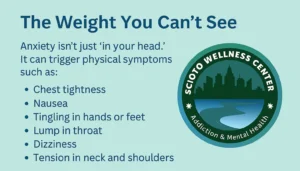
Anxiety Isn’t Just “In Your Head”
Here’s something most people don’t realize: anxiety is a full-body experience. It’s wired into your nervous system, which means your body is responding even when your brain is trying to be logical.
You might feel:
- Your chest tighten out of nowhere
- Butterflies—or full-blown nausea—before something stressful
- Tingling in your hands or feet
- A lump in your throat that makes it hard to speak
- Dizziness or feeling faint
- Constant tension in your shoulders or neck
If you’ve felt these symptoms and Googled them only to be told “it’s anxiety,” it can feel dismissive. But it’s not nothing—it’s your body trying to protect you. Only it’s doing it too often, or at the wrong time.
In anxiety therapy, we start by recognizing this: your body isn’t the enemy. It’s just trying too hard.
Why Anxiety Feels So Physical
Your brain and body are built to respond to danger. This is called the “fight, flight, or freeze” response. Back in caveman days, this helped us escape predators. But in modern life, that same alarm system goes off in traffic, during a work meeting, or even while scrolling your phone in bed.
Here’s what happens:
- Your brain senses something stressful (even if it’s just a thought).
- It sends signals to your adrenal glands to release stress hormones.
- Your heart races, muscles tense, digestion slows down.
- You feel shaky, nauseous, or lightheaded—even if there’s no real threat.
This is why anxiety isn’t “just mental.” It lives in your nervous system, your hormones, your breathing, your gut. It’s not imagined—and it’s not permanent.
From Panic to Pattern: What Therapy Can Show You
One of the most powerful moments in anxiety therapy is realizing your symptoms aren’t random. They follow patterns. Maybe it always starts with your stomach. Maybe you clench your fists without realizing it. Maybe your mind spirals after your body reacts.
Therapists at Scioto Wellness Center are trained to help you map these patterns—not to judge them, but to decode them. That way, instead of fearing the next episode, you start to see it coming. You get tools that help you interrupt it. You learn how to soothe the nervous system so your body doesn’t carry all the weight.
Medication Fear is Real—And It’s Okay to Talk About It
For many people, hearing the word “medication” triggers fear, skepticism, or even identity panic. What if it changes me? What if it numbs me? What if I lose something I love about myself?
These are not silly questions. They’re deeply human ones.
Anxiety therapy offers a space to talk about this honestly. Not every person with anxiety needs or chooses medication. And not every medication works the same for every person. What therapy can do is help you explore why you’re hesitant, what you’re scared of, and what alternatives or adjustments might be possible.
There’s no pressure to decide anything overnight. In fact, slowing down the decision is often the most empowering thing you can do.
What Progress Actually Looks Like
Healing from anxiety isn’t always linear. It’s not like flipping a switch and suddenly feeling calm. More often, it looks like this:
- Your chest still tightens—but you don’t spiral into panic.
- You feel anxious at work—but you don’t cancel plans out of fear.
- You wake up with worry—but you know how to ground yourself back to safety.
- You start to notice your patterns sooner.
- You feel more in control—even on days that are hard.
These moments may seem small, but they’re massive. Therapy helps you build them, one by one.
From One Peer to Another: You Are Not Broken
If you’re reading this wondering if you’re too sensitive or too far gone or “just making a big deal out of nothing”—stop. Anxiety lies to us. It tells us we’re being dramatic. It tells us we’re weak for struggling. But let me be clear: anyone who lives with daily anxiety is not weak. You are incredibly strong. You’ve survived something your nervous system thought was a threat—even if no one else could see it.
You don’t have to “get over it.” You just deserve to feel safe again. Your body deserves peace. Therapy is one way to start reclaiming that.
Why Local Matters: Anxiety Therapy in Hilliard, Ohio
Scioto Wellness Center offers anxiety therapy in Hilliard, Ohio that’s grounded in compassion, clarity, and choice. We’re here for people who are just starting to explore what’s going on in their minds and bodies—and for those who’ve been silently battling for years.
Our team understands that the first step isn’t always easy. Whether you’re ready to start therapy, want to ask questions about medication, or just need someone to listen, we meet you where you are. No judgment. No pressure. Just real help.
FAQs About Anxiety Therapy
How do I know if my physical symptoms are from anxiety or something medical?
This is a valid and important question. Many people start by seeing their primary care doctor to rule out medical conditions. Once medical causes are ruled out, therapy can help make sense of ongoing symptoms that don’t seem to have a physical cause—but are very real and disruptive.
What types of therapy help with physical symptoms of anxiety?
Cognitive Behavioral Therapy (CBT), somatic-based therapy, and mindfulness approaches are often effective. These methods teach you how to connect body cues with thought patterns, and how to soothe your nervous system. Our therapists will help you find what feels right—not force a one-size-fits-all approach.
Do I have to take medication to get better?
Not at all. Medication is one option, not a requirement. Many people make meaningful progress through therapy alone. If you’re curious or unsure, your therapist can help you explore it without pressure.
Can therapy help if I’ve been anxious my whole life?
Yes. Many people don’t realize they’ve had anxiety until adulthood, even if it’s been there since childhood. Therapy can help you understand how anxiety has shaped your habits, relationships, and even identity—and offer ways to create new patterns.
Is virtual therapy available?
Yes. Scioto Wellness Center offers both in-person and telehealth options for anxiety therapy in Ohio. This flexibility can be especially helpful for those whose anxiety makes leaving the house difficult.
You Deserve to Feel Safe in Your Own Skin
Anxiety doesn’t make you broken. It means your body is asking for safety, and therapy can help you answer that call. Whether you’re feeling symptoms for the first time or finally giving a name to something that’s been there for years—healing is possible.
Call (888) 351-9849 or visit Scioto Wellness Center’s Anxiety Therapy page to learn more about our Anxiety Therapy services in Hilliard, Ohio.