
You’re not falling apart—but you’re not okay.
You’re still getting up, working out, making deadlines, making dinner. Maybe you even host Thanksgiving. But under the surface? There’s tension. Exhaustion. A slow, creeping reliance on alcohol that feels heavier this time of year.
You might not call it a drinking problem. But it’s starting to feel like a problem.
This blog isn’t about hitting bottom. It’s about recognizing that holiday triggers are real—and that there are options, like an Intensive Outpatient Program in Hilliard, Ohio, that offer support without requiring your whole life to stop. Learn more about our alcohol rehab in Columbus program.
High-Functioning Doesn’t Mean Unaffected
Thanksgiving is marketed as joyful, warm, full of gratitude. But if you’re someone who drinks to manage stress, performance, or pain—it can feel like an emotional landmine.
Even if you’re “doing well,” the season might stir up things you’d rather avoid:
- Longstanding family dynamics that never got healthier
- The pressure to be the glue that holds everyone together
- Memories or grief that show up uninvited
- Social obligations where drinking feels expected—or necessary
If any of that rings true, you’re not alone. You’re not failing. You’re just feeling the weight that this season puts on people who’ve been holding it together for too long.
The Slide Is Subtle—Until It’s Not
Alcohol often plays a silent role during the holidays. At first, it’s the casual wine pour while cooking. The extra beer to “take the edge off.” The mental math: “It’s a holiday, I deserve this.”
But when one drink turns into three before dinner, or when “just one” becomes a coping ritual—you start to notice.
You may start asking yourself:
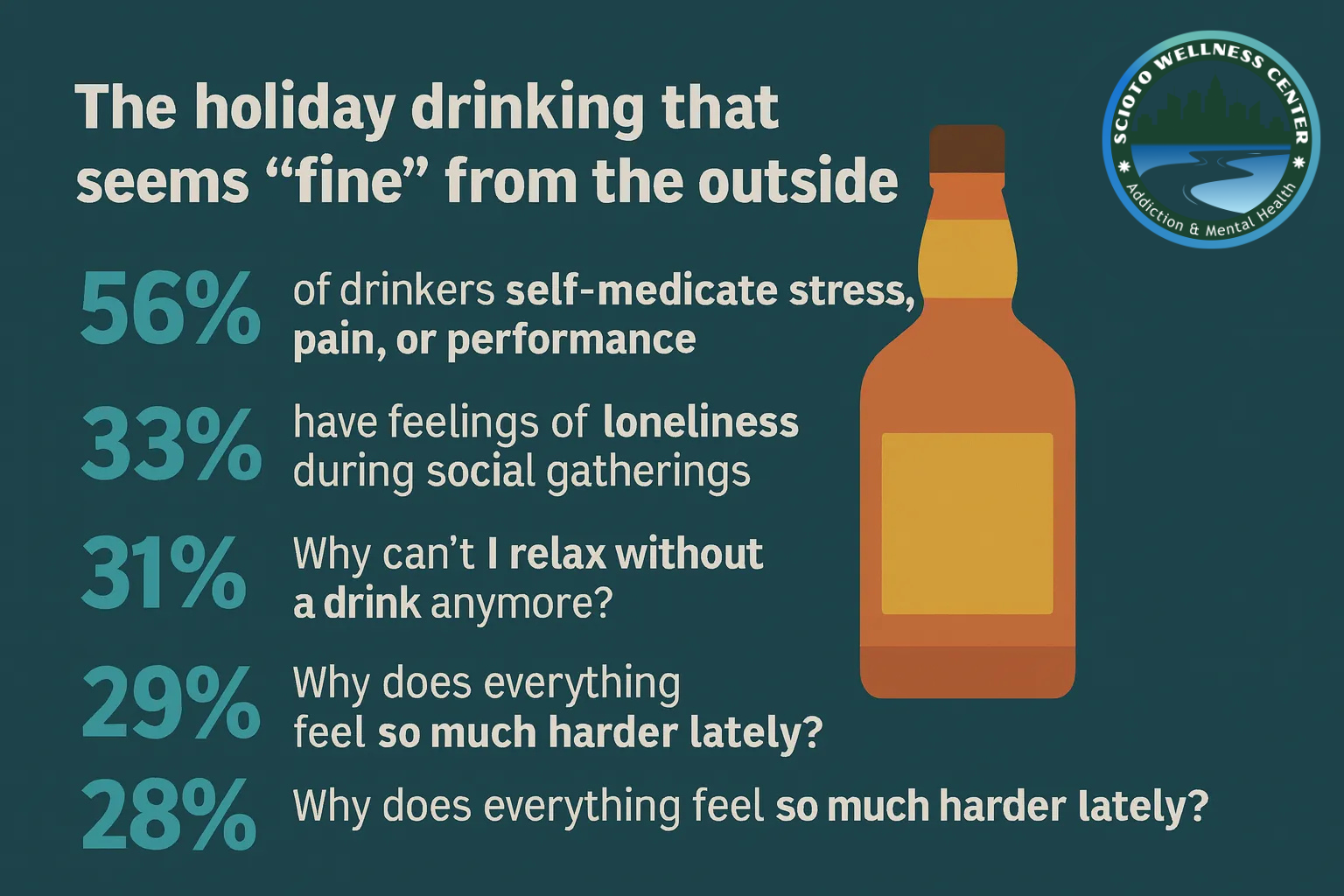
- Why can’t I relax without a drink anymore?
- Why do I need this so badly at the end of the day?
- Why does everything feel so much harder lately?
You’re not imagining it. Alcohol is doing its job—numbing, muting, easing. Until it stops working and starts taking something from you.
IOP Is for People Who Don’t Want to Wait for Rock Bottom
You don’t need to lose your job, your family, or your self-respect to qualify for help. You just need to be tired of how things are.
That’s exactly where Intensive Outpatient Programs (IOP) come in.
IOP is designed for people who still have responsibilities to uphold—but want meaningful change. You continue living at home. You keep working. And you participate in structured therapy several times a week.
It’s accountability without disruption. Reflection without isolation. Real work that meets you where you are—not where the worst-case scenario would land you.
What Makes the Holidays So Triggering?
Let’s name it:
Alcohol is woven into holiday culture. It’s how we celebrate, decompress, survive awkward conversations, and reward ourselves for making it through the day.
But the emotional terrain of Thanksgiving brings more than clinking glasses:
- Family triggers. Being around people who bring up old roles, wounds, or patterns.
- Perfection pressure. Especially if you’re the responsible one, the host, or the caretaker.
- Loneliness in plain sight. Even surrounded by people, you may feel isolated in your struggle.
- Unprocessed grief or trauma. Holidays can reopen what never fully healed.
You don’t have to be falling apart to feel like you’re drowning. Especially if you’ve learned to hide it well.
What Happens Inside an Intensive Outpatient Program?
It’s not bootcamp. It’s not judgment. It’s not about labeling you as “an addict.”
It’s space.
Space to talk about what’s happening underneath the over-functioning. Why alcohol has become your coping tool. What’s keeping you stuck. And what needs to shift.
Here’s what you can expect from IOP at Scioto Wellness Center:
- Group Therapy with people who actually get it—because they’re in it too
- Individual Therapy to untangle your patterns and build healthier ones
- Psychoeducation about how the brain, body, and emotions respond to stress and substances
- Coping Skills Training for real-life moments—not theory, but usable tools
- Support that fits your schedule, usually 3–5 days a week, mornings or evenings
It’s clinical. It’s supportive. It’s designed for people who still need to be present in their lives—just not while silently suffering.
It’s Not About Quitting Cold Turkey. It’s About Getting Honest.
You might not be ready to give up drinking forever. You might not even use the word “problem” yet.
That’s okay.
What matters more is the honesty:
- “I’m using alcohol to manage stress.”
- “It’s not working like it used to.”
- “I’m tired of hiding how bad it feels.”
IOP meets you at that moment—not after a dramatic breakdown. The truth is, for high-functioning adults, the quiet unraveling is often harder to interrupt than a loud crisis.
This is your interruption.
Client Voices: What It Feels Like to Say Yes
“I didn’t think I needed treatment because I was still holding everything together. But I was so tired. IOP gave me a place to exhale.”
– Outpatient Client, 2023
“I thought asking for help meant I had to hit bottom. Turns out, it just meant I was done carrying it all alone.”
– Scioto Wellness Client, 2024
These aren’t cautionary tales. They’re real stories of people who looked fine—but didn’t feel fine—and found support before everything broke.
How Scioto Wellness Center Serves the Hilliard Community
Located right here in Hilliard, Ohio, Scioto Wellness Center is built for people like you. People navigating big feelings and heavy loads behind outward success.
Whether you’re a working parent, a college student, a business owner, or a caretaker—you don’t have to wait until your life collapses to get help.
Our IOP services are accessible, confidential, and structured for busy lives.
Related link: Learn more about our full levels of care
FAQs About Intensive Outpatient Programs (IOP)
Do I have to stop drinking to join IOP?
Not necessarily. Many clients enter IOP still drinking but aware that it’s becoming a problem. The program will help you explore your relationship with alcohol and make a plan that feels right and realistic.
What’s the difference between IOP and inpatient rehab?
Inpatient rehab requires living at the facility full-time. IOP allows you to live at home and continue working or caregiving while attending structured sessions multiple times per week.
Will anyone at work or in my family find out I’m in IOP?
No. Your participation in IOP is protected under HIPAA and kept entirely confidential. Many sessions are held outside of traditional work hours to preserve your privacy and flexibility.
What if I’m not sure I have a “real” problem?
You don’t need a diagnosis or a crisis to benefit from support. IOP is designed for people who are in that in-between place—functioning, but struggling quietly.
How long does IOP last?
Typically, programs run for 6 to 12 weeks, depending on your needs. You’ll work with your clinician to determine the best timeline and plan.
You’re Allowed to Want More Than Just Getting By
You’ve done an incredible job holding it all together. That strength is real. But if you’re drinking just to make it through another family dinner, another late night, another overstuffed calendar—you deserve something better.
And that something doesn’t have to mean starting over. It can start small: a conversation. A visit. A breath.
Let’s Talk.
Call (888) 351-9849 or visit Scioto Wellness Center’s Intensive Outpatient Program to learn more about how we help high-functioning adults find relief, clarity, and support—especially during the holidays.