
You didn’t plan to stop showing up.
But maybe you missed one group. Then two. Maybe something happened—a personal crisis, a schedule change, a relapse—or maybe nothing dramatic happened at all. You just… stopped going.
Now, you’re thinking about reaching back out. And that voice in your head? It’s loud.
It says:
“You abandoned your program.”
“They probably think you don’t care.”
“You’ll have to explain everything.”
Here’s what we want you to hear louder: You are still allowed to ask for help.
At Scioto Wellness Center’s Intensive Outpatient Program in Hilliard, Ohio, we see this happen more than people realize. And more importantly, we welcome people back—without judgment, without shame, and without demanding that you justify your absence.
This blog is here to guide you through what it actually looks and feels like to reconnect after ghosting IOP. Because you’re not alone, and this isn’t the end of your story.
You’re Not the Only One Who’s Disappeared
Let’s be clear: ghosting isn’t rare. It doesn’t make you flaky or irresponsible. It makes you human.
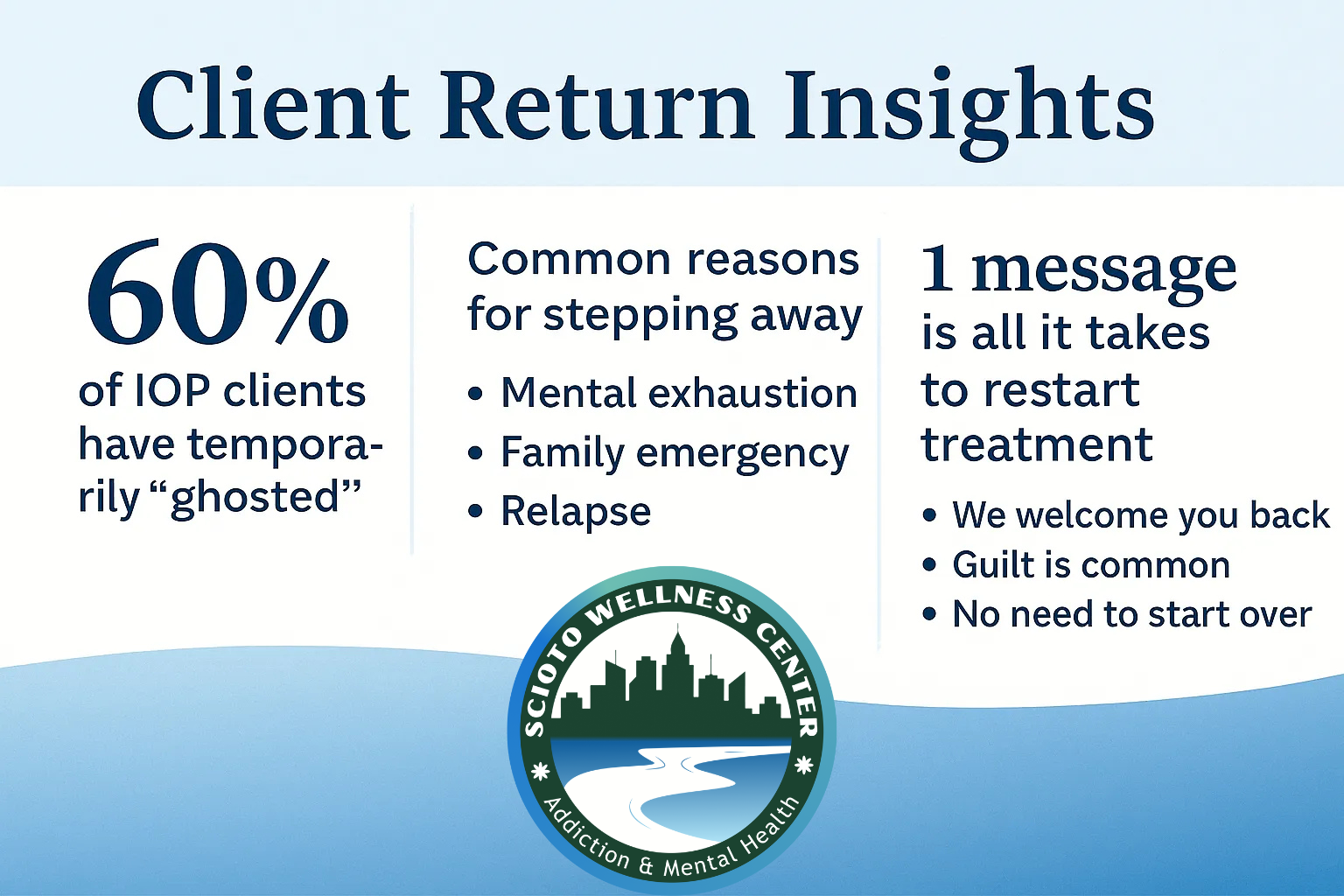
People step away from IOP for all kinds of reasons, including:
- Mental exhaustion
- Family emergencies
- Work changes
- Emotional triggers from the program itself
- Not feeling ready—even after starting
- Overwhelmed by the vulnerability required
- Internalized guilt, shame, or fear
Most people who ghost aren’t ignoring their healing—they’re drowning quietly. They want to come back, but they don’t know how. If that’s you, you’re in good company.
You Don’t Need a Speech—Just a Signal
You don’t need a carefully crafted message or a full explanation to re-enter.
You can send a simple message:
- “I’d like to come back. What do I do next?”
- “It’s been a while—can I restart?”
- “Can I talk to someone about returning?”
That’s it. Really.
When someone contacts us after ghosting their intensive outpatient program, our focus isn’t why you left—it’s what you need now. We’re not here to interrogate. We’re here to reconnect.
Guilt Is Loud, But It’s Not in Charge
Most returning clients carry guilt like a second skin. It says:
- “I let people down.”
- “I abandoned the group.”
- “I should’ve done better.”
But guilt is just the echo of self-doubt. It thrives in silence. The moment you reach out, it begins to lose its grip.
You may feel guilty. That’s normal. But that guilt doesn’t have to dictate your next move. You’re allowed to return with it. And eventually, you’re allowed to release it too.
We don’t expect perfect clients. We don’t ask you to be fearless. We just ask you to reach out—even if it’s messy.
You Don’t Have to Start Over
One of the biggest myths about IOP is that if you ghost, you have to start from scratch.
That’s not true.
You may have:
- Missed some groups
- Fallen behind on goals
- Lost track of your initial treatment plan
But none of that erases the insight, progress, or effort you’ve already put in.
We’ll check in to see where you are now and rebuild from there. Sometimes that means adjusting the structure or timeline. Other times, it means picking up right where you left off.
The healing you did before your pause? It still counts.
It’s Okay if This Time Looks Different
When you come back, things might need to shift. That’s not a failure—that’s growth.
You might need:
- A new therapist
- A smaller group setting
- Flexible session times
- A slower re-entry
- Different therapeutic goals
That’s all allowed.
This is your treatment. Your needs matter. You don’t have to fit back into the old mold. We can adapt the program to match your life today—not who you were when you left.
What If You’re Not Sure You’re Ready?
You don’t have to be 100% ready to reach out.
In fact, many people reconnect with IOP while still feeling:
- Ambivalent about treatment
- Embarrassed about leaving
- Unsure about their goals
- Nervous about the group dynamic
- Afraid of being seen as unreliable
We normalize all of that. You’re allowed to say, “I think I want to come back, but I’m scared.” Or even, “I’m not sure what I want—I just know I don’t want to keep doing nothing.”
Those statements don’t disqualify you. They open the door to honest conversation—maybe the most important kind.
How We Handle Re-Entry at Scioto Wellness Center
When you reach out to return, here’s what actually happens:
- Quick connection: You call or message us. We respond quickly—and warmly.
- Check-in conversation: We ask how you’re doing and what feels possible right now.
- Care review: We explore whether to restart, adjust, or create a new schedule or plan.
- Start fresh: You rejoin—gently, without pressure, and with full support.
There’s no punishment. No “three strikes” rule. No awkward confrontation.
We’re just glad to see you again.
What People Say After Coming Back
“I thought I had to explain myself, but all they said was, ‘We’re glad you’re here.’”
– Returned after a 6-week gap
“I was nervous the group would judge me. They didn’t. Most of them had left and come back before too.”
– Returned post-relapse
“I felt like a failure for leaving. But rejoining helped me realize the story wasn’t over—it just paused.”
– Returned after a family emergency
FAQs: Reaching Out After Ghosting IOP
Is it really okay to come back if I ghosted?
Yes. It happens often. We never close the door. Whether it’s been a few days or a few months, you are still welcome.
Do I have to start the whole program over?
No. We’ll assess your current needs and build from there. You might resume where you left off, or shift into a modified version of the program.
Will I be judged by the group?
No. Most group members have been through something similar. Our groups are structured to be supportive, nonjudgmental, and understanding of relapse, pauses, and re-entries.
What if I used substances during my time away?
That’s okay. Relapse doesn’t cancel recovery. If substance use was part of your break, we’ll support you through the next steps with honesty and care—not blame.
What if I’m not sure I want to fully rejoin?
You can start by talking to someone. There’s no pressure to recommit immediately. We can help you figure out what feels right.
One Step Is All It Takes
You don’t have to fix everything before you come back. You don’t have to be ready to talk about everything. You don’t even have to know what to say.
You just have to reach out.
One step. One message. One call.
Ready to talk?
Call (888) 351-9849 or visit Scioto Wellness Center’s Intensive Outpatient Program to ask for help after ghosting. You’ll be met with compassion, not criticism—and a place to begin again.