
If you are searching for DBT therapy in Columbus, Ohio, you may be looking for practical tools to manage intense emotions, impulsive reactions, or relationship stress. Emotional regulation is not about shutting feelings down. It is about learning how to experience emotions without being controlled by them.
At Scioto Wellness Center in Hilliard, serving the greater Columbus area, DBT is offered within structured outpatient programs designed to support both mental health and addiction recovery. Our licensed clinical team uses evidence-based approaches within trauma-informed care plans. Treatment may include group therapy, individual therapy, and medication management when appropriate. Insurance verification is available to help you understand your options clearly before starting care.
What Is DBT Therapy?
Dialectical Behavior Therapy, often called DBT, is a structured, skills-based form of therapy that helps you manage intense emotions, improve relationships, and reduce impulsive behaviors. In Columbus, Ohio, DBT therapy is commonly used in outpatient mental health programs to support emotional regulation, anxiety, depression, trauma-related symptoms, and co-occurring substance use.
DBT combines two core ideas: acceptance and change. You learn to accept your emotional experiences while also developing practical strategies to respond differently.
How DBT Therapy Columbus Ohio Supports Emotional Regulation
Emotional regulation means learning how to understand, tolerate, and respond to feelings in a balanced way. When emotions feel extreme or unpredictable, they can impact work performance, relationships, and decision-making.
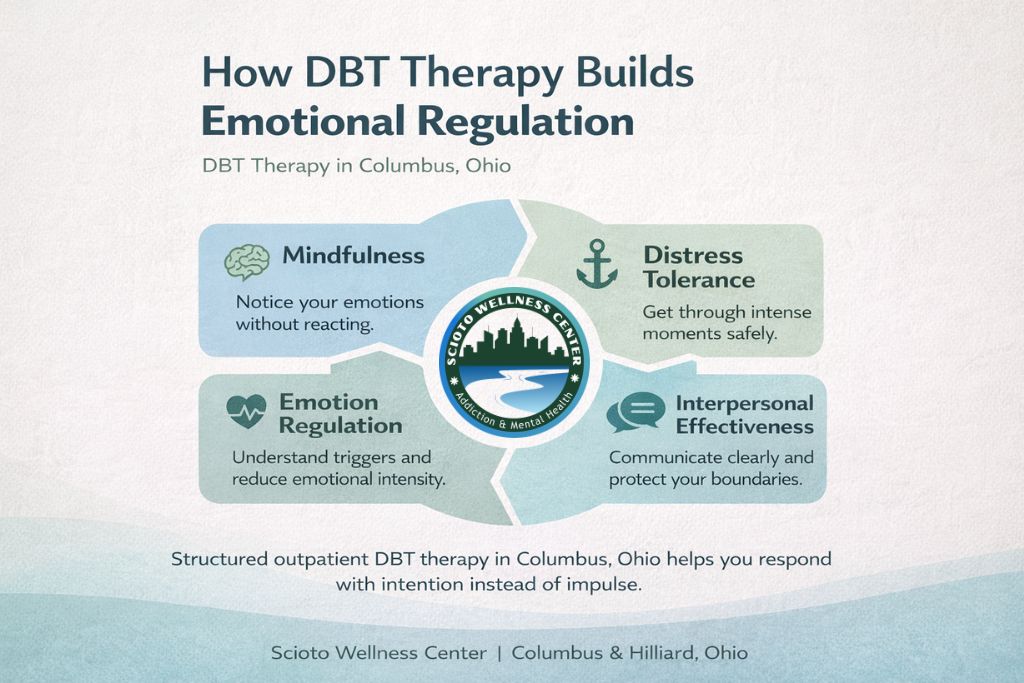
DBT therapy Columbus Ohio focuses on four core skill areas:
1. Mindfulness
Mindfulness helps you stay present instead of reacting automatically. You learn to observe thoughts and feelings without judgment. This creates space between feeling and action.
2. Distress Tolerance
Distress tolerance skills help you get through difficult emotional moments without making them worse. Instead of acting impulsively, you build tools to ride out emotional waves safely.
3. Emotion Regulation Skills
These skills help you identify triggers, reduce emotional vulnerability, and shift intense moods more effectively. You learn how sleep, stress, and physical health influence emotional intensity.
4. Interpersonal Effectiveness
Relationships often activate strong emotions. DBT teaches communication skills that help you set boundaries, ask for what you need, and maintain self-respect.

If communication patterns have been difficult, learning how to set boundaries that protect your sobriety or emotional health can make a meaningful difference.
How Does DBT Therapy Help with Emotional Regulation?
DBT therapy helps with emotional regulation by teaching structured skills that allow you to recognize emotional triggers, tolerate distress, and respond thoughtfully instead of reacting impulsively. In Columbus, Ohio, DBT is commonly provided in outpatient programs where clients practice mindfulness, distress tolerance, and communication skills in both individual and group therapy settings.
Who This Is For
DBT therapy Columbus Ohio may be helpful if you:
- Experience rapid mood shifts
- Feel overwhelmed by anger, sadness, or anxiety
- Struggle with impulsive behaviors
- Have difficulty maintaining relationships
- Feel emotionally reactive under stress
- Experience both mental health and substance use concerns
- Feel emotionally exhausted from trying to “hold it together”
DBT is often integrated into anxiety therapy services and dual diagnosis care when emotional dysregulation overlaps with addiction recovery.
How Treatment Works at Scioto Wellness Center
DBT is structured and intentional. It is delivered through multiple levels of care depending on your needs.
Partial Hospitalization Program (PHP)
Our partial hospitalization program in Hilliard provides intensive daytime support while allowing you to return home in the evenings. If you are unsure what this level involves, you can learn more about what a partial hospitalization program is and how it provides structure without full inpatient admission.
Some people initially worry that PHP is too much. In reality, for many individuals, a structured daytime program becomes the stabilizing bridge when home alone does not feel sufficient.
Intensive Outpatient Program (IOP)
Our intensive outpatient program in Columbus offers flexible scheduling with continued DBT skill development several days per week. This level works well if you are balancing work, school, or family responsibilities.
Many clients find that returning to IOP after a setback can feel intimidating. Re-entering treatment without shame is possible, and support remains available when you are ready.
Individual Therapy
One-on-one sessions allow you to personalize DBT skills and process emotional experiences safely.
Group Therapy
DBT groups provide guided skill instruction and real-time practice. If you have ever wondered whether group therapy is actually helping, skill-based models like DBT often make progress more visible because tools are practiced weekly.
Medication Management
If appropriate, psychiatric support can be integrated into your treatment plan.
Dual Diagnosis Care
If you are navigating both emotional dysregulation and substance use, structured outpatient programs can address both together. Integrated care improves consistency and reduces fragmentation.
DBT Therapy Columbus Ohio vs Other Therapies
Many people compare DBT with CBT.
CBT focuses heavily on identifying and restructuring thought patterns. DBT includes cognitive strategies but emphasizes emotional tolerance and acceptance skills.
If you are exploring therapy options, understanding how CBT therapy can help you regain control of your thoughts may clarify the differences. Some individuals benefit from combining both approaches.
Outpatient DBT programs differ from inpatient treatment because they allow you to remain connected to daily life while receiving structured support. For some people, outpatient care provides the right balance of stability and independence.
Signs It May Be Time to Seek Support
You do not need a crisis to begin therapy. Consider reaching out if:
- Emotional reactions feel disproportionate
- You regret behaviors that happen during intense moments
- Relationships feel unstable
- Anxiety feels physical and overwhelming
- You use substances to cope with emotions
- You feel chronically emotionally drained
When anxiety shows up in the body, it can feel confusing and even frightening. Learning to regulate both physical and emotional responses can reduce that intensit
How DBT Builds Long-Term Stability
DBT therapy Columbus Ohio is not about eliminating emotions. Emotions provide important information. The goal is to respond with intention rather than react automatically.
With consistent participation, many individuals experience:
- Increased emotional awareness
- Reduced impulsive decision-making
- Improved communication
- Greater resilience during stress
- Stronger sense of self-control
- Improved sobriety stability when addiction is involved
Clients who also struggle with anxiety often find that structured skills make anxiety therapy more effective and daily life more manageable.
Progress happens gradually. Emotional regulation strengthens with repetition.
Common Misconceptions About DBT
“DBT Is Only for Severe Diagnoses”
DBT was originally developed for specific clinical populations but is now widely used for anxiety, depression, trauma-related symptoms, and emotional instability.
“It Is Just Talking About Feelings”
DBT is highly structured. Sessions include skill instruction, worksheets, exercises, and measurable goals.
“I Should Be Able to Control My Emotions Alone”
Emotional regulation is a learned skill. Many people were never taught how to manage intense feelings in healthy ways. Therapy provides structure and guidance without judgment.
What to Expect During the First Week of DBT Therapy Columbus Ohio
Your first week typically includes:
- A comprehensive assessment
- Goal setting
- Introduction to core DBT skills
- Participation in structured group sessions
- Individual therapy planning
You will not be expected to have everything figured out. The process is collaborative and paced carefully.
FAQ: DBT Therapy Columbus Ohio
How do I know if DBT therapy Columbus Ohio is right for me?
If emotional intensity, impulsivity, or unstable relationships are affecting your life, DBT may help. A professional evaluation can determine the appropriate level of care.
Can I work while participating in DBT therapy?
Yes. Many clients attend our intensive outpatient program while maintaining work or school schedules.
Does insurance cover DBT therapy in Columbus?
Most insurance plans cover outpatient mental health treatment. You can verify your insurance benefits before admission.
Is DBT only for borderline personality disorder?
No. DBT is used for anxiety, depression, trauma, and emotional dysregulation across many diagnoses.
Do I need detox before starting DBT?
If substance use requires medical detox, that step may occur before beginning structured outpatient care. Our admissions team can guide you.
Taking the Next Step Toward Emotional Stability
DBT is one of several evidence-based therapies available at Scioto, and it works best when integrated into a broader clinical plan. Many clients combine DBT skills work with cognitive behavioral therapy, which focuses on reshaping the thought patterns that fuel emotional dysregulation in the first place. Individual therapy sessions allow your clinician to tailor both approaches to your specific history, and for clients where past trauma is driving the intensity of their emotional responses, trauma therapy at Scioto runs alongside DBT to treat that underlying layer directly.

Learning emotional regulation is not about becoming someone else. It is about gaining steadiness. When emotions feel overwhelming, structured support can help you build skills that last.
If you are ready to explore DBT therapy Columbus Ohio, support is available. Call (888) 437-1898 or verify your insurance online. Our Hilliard team proudly serves Columbus, Grove City, Dublin, and surrounding communities with structured, compassionate outpatient care.
You do not have to navigate emotional overwhelm alone. With the right tools and guidance, stability becomes possible.