You’ve known for a while that something needs to change. The drinking after work has become less about unwinding and more about coping. The anxiety that kept you high-performing now affects your sleep, relationships, and sense of control. Maybe it’s prescription medication that started as pain management but quietly became something harder to stop.
You’re not at rock bottom. You’re still working, still showing up, still managing most of what needs managing. But you’re also aware that continuing this way isn’t sustainable.
The challenge? Traditional treatment models often require you to pause your career entirely. Inpatient programs mean weeks away from work. Daytime outpatient programs conflict with professional obligations.
That’s where evening intensive outpatient programs come in. At Scioto Wellness Center in Hilliard, just outside Columbus, nighttime IOP allows you to maintain full-time employment while receiving evidence-based care. This isn’t about cramming treatment into inconvenient hours. It’s about recognizing that recovery doesn’t require you to dismantle your life to rebuild it.
What Evening IOP Looks Like
Intensive Outpatient Programs provide structured clinical support several times per week while allowing you to live at home and maintain daily responsibilities. Evening IOP at Scioto Wellness runs three evenings weekly, from 6:00 PM to 9:00 PM. That’s nine hours of treatment per week, meeting clinical standards for intensive outpatient care.
Each three-hour session typically includes group therapy led by licensed clinicians, individual therapy components, practical skills training for managing cravings and emotions, and regular treatment planning. You come directly from work, participate in therapy, and return home the same evening.
Evening IOP requires nine hours of treatment per week across three sessions. This meets the clinical standard for intensive outpatient care while allowing you to work full-time. Most people attend Monday, Wednesday, and Friday from 6:00 PM to 9:00 PM, maintaining their regular Monday through Friday work schedule without disruption.
This schedule works because it’s structured enough to create meaningful change while remaining compatible with full-time work. You don’t explain daytime absences to your employer. You don’t use FMLA leave. You maintain your routine, income, and professional identity while addressing what’s been quietly undermining all of it.
Who Evening IOP Serves
Evening programs work best for people who have stable employment and housing, moderate to significant treatment needs beyond what weekly therapy can address, reliable transportation, and motivation to engage with the process.
Evening IOP is particularly well-suited for professionals who have been high-functioning while struggling. You may have hidden your drinking or drug use well. You may have managed anxiety or depression through sheer willpower. The pattern works until it doesn’t, and when it stops working, you need support that doesn’t require blowing up your entire life to access it.
Research consistently demonstrates that intensive outpatient programs produce outcomes equivalent to residential treatment for appropriate candidates. Studies show no significant difference in long-term recovery rates between inpatient rehab and IOP for individuals who have stable living situations and support systems. Evening IOP provides the same evidence-based therapies as daytime programs, including Cognitive Behavioral Therapy (CBT), Dialectical Behavior Therapy (DBT), trauma-informed approaches, and relapse prevention strategies.
Why Evening Scheduling Matters for Working Professionals
Maintaining Employment and Identity
The most obvious benefit is keeping your job. This isn’t just about income, though financial stability during treatment matters. It’s also about identity, routine, purpose, and the psychological scaffolding that employment provides.
Many people define themselves through their work. Stepping away entirely can feel destabilizing when you’re already working through addiction or mental health challenges. Evening IOP allows you to maintain that structure while addressing what needs attention.
Work provides distraction, purpose, and social connection. For many, these things are stabilizing. Evening IOP lets you apply what you learn in real time. You learn coping skills Monday evening and use them at work Tuesday morning. You identify triggers in group therapy Wednesday and navigate them Thursday.
Privacy and Discretion
Professional reputation matters. Stigma around addiction and mental health treatment still exists in many workplaces. Evening IOP scheduling naturally protects your privacy. Your coworkers don’t see you leaving early for daytime appointments. Treatment happens outside your work environment entirely, which means you control who knows.
Federal law provides additional protection. HIPAA protects your health information privacy. Additionally, addiction treatment falls under even stricter confidentiality through 42 CFR Part 2, which specifically governs alcohol and drug abuse patient records. Your treatment provider cannot disclose your participation without explicit written consent.
This doesn’t mean hiding treatment from everyone. Many find that selective disclosure to trusted colleagues or supervisors reduces stress. The point is that you get to decide.
Insurance Coverage
Under the Mental Health Parity and Addiction Equity Act, most health insurance plans must cover mental health and substance use treatment at levels comparable to medical benefits. Most commercial insurance plans, including Aetna, UnitedHealthcare, Blue Cross Blue Shield (Anthem in Ohio), and Cigna, cover IOP services at 60 to 80 percent after deductibles.
Insurance Coverage Summary: Commercial insurance typically covers 60 to 80 percent of evening IOP costs after your deductible. Prior authorization is usually not required for IOP (unlike residential or PHP programs). Maintaining your employment means maintaining your insurance coverage, avoiding expensive COBRA continuation costs.
Importantly, maintaining employment means maintaining insurance coverage. Evening IOP allows you to keep working, which means your insurance stays active without additional complexity or cost. At Scioto Wellness, we verify your insurance benefits before you start treatment so you know exactly what your out-of-pocket costs will be.
A Typical Week with Evening IOP
You work your normal schedule, Monday through Friday, 9 AM to 6 PM. On Monday, Wednesday, and Friday evenings, you attend IOP from 6:00 PM to 9:00 PM.
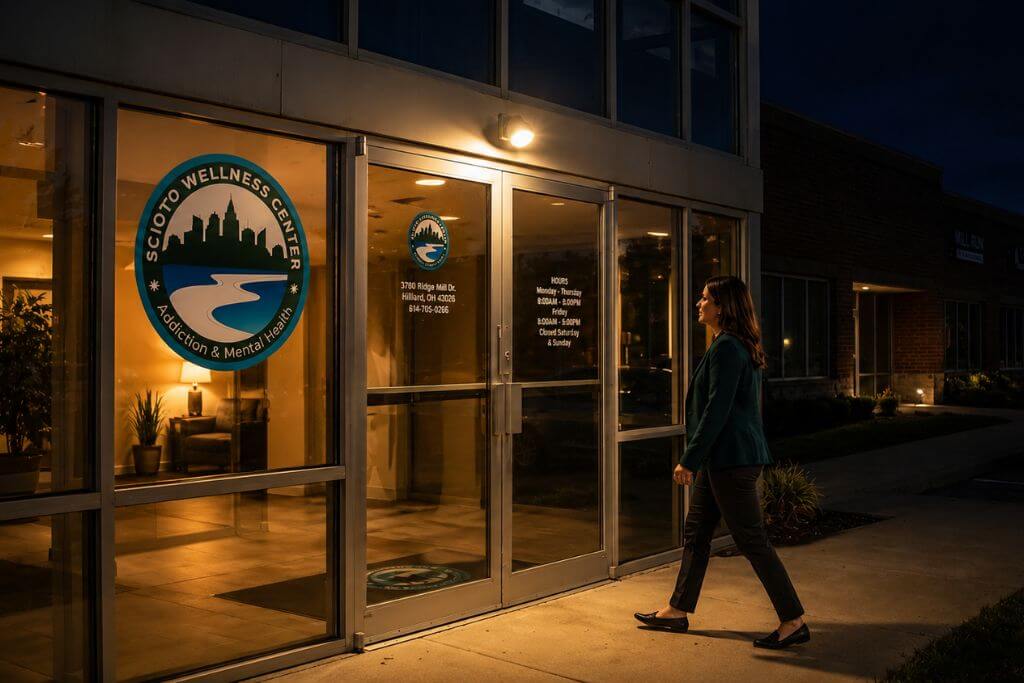
You leave work at your usual time. The facility is located at 3780 Ridge Mill Drive in Hilliard, about 15 minutes from downtown Columbus, with easy access from I-270. Treatment runs until 9:00 PM. You’re home by 9:30 PM, still with time to decompress before the next workday. On Tuesday and Thursday, you don’t have sessions, creating natural breathing room.
Adding nine hours of treatment to a full work week requires adjustment. Practical strategies help: prepare meals in advance, communicate boundaries at work (you’re not available for evening calls three nights weekly), build in recovery time on off nights, and prioritize seven to eight hours of sleep.
The structure itself often reduces stress rather than adding to it. Many professionals report that scheduled treatment creates clarity. You’re actively working on the problem instead of just managing it.

Coordination with Medication-Assisted Treatment
If you’re pursuing medication-assisted treatment (MAT) for opioid or alcohol use disorder, evening IOP integrates smoothly with that care. Scioto Wellness offers office-based opioid treatment, meaning you’re not making daily clinic trips for medication.
You meet with a prescriber during your initial assessment and then every two to four weeks. These appointments can be scheduled during lunch breaks, before work, or on weekend mornings. Your medication, whether Suboxone (buprenorphine/naloxone), naltrexone, or another FDA-approved option, is filled at a regular pharmacy.
The IOP clinicians and your prescriber coordinate your care. Your treatment plan is integrated, not fragmented. Everything happens under one roof with one communicating team.
What Scioto Wellness Evening IOP Provides
Evidence-Based Clinical Approach
Scioto Wellness uses evidence-based therapies extensively researched for addiction and mental health treatment. The approach is trauma-informed, meaning clinicians understand how past experiences shape current struggles.
Primary therapeutic approaches include CBT for identifying and changing thought patterns that maintain addiction, DBT for emotion regulation and mindfulness skills, trauma-informed care that works with rather than against trauma responses, motivational interviewing that respects ambivalence about change, and relapse prevention planning for identifying high-risk situations.
Dual Diagnosis Treatment
Many people who need addiction treatment also have co-occurring conditions like depression, OCD, PTSD, or ADHD. Traditional programs sometimes tell people to “work on sobriety first” and deal with mental health later. That approach fails because the conditions are interconnected.
Scioto Wellness specializes in dual diagnosis treatment, addressing addiction and mental health conditions simultaneously in one integrated plan. The same clinical team treats both. This integrated approach is particularly important for working professionals who often used substances to manage untreated anxiety, depression, or other conditions.
Location and Environment
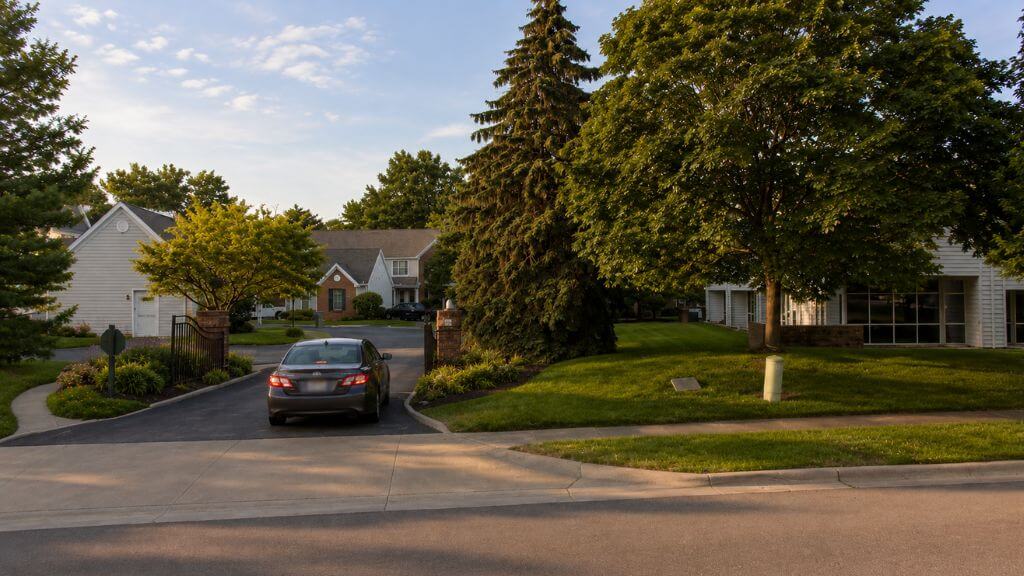
Scioto Wellness Center is located at 3780 Ridge Mill Drive in Hilliard, about 15 minutes west of downtown Columbus and easily accessible from I-270. The location is deliberate. It’s in a quiet residential neighborhood near the Scioto River, not a busy medical district.
Inside, the environment is designed to feel calm and grounding rather than clinical. The goal is creating a space where people actually want to be. Parking is free and plentiful. For professionals coming directly from work in Columbus, Grove City, Dublin, or surrounding areas, the location provides convenient access without downtown traffic or parking hassles.
Common Questions About Evening Treatment
Will my employer find out?
Not unless you choose to tell them. HIPAA protects your health information. 42 CFR Part 2 provides even stronger protections specifically for alcohol and drug treatment. Your insurance Explanation of Benefits shows general categories like “outpatient mental health,” not “addiction treatment” or “IOP.”
The scheduling itself protects privacy. You’re attending treatment outside work hours. Coworkers don’t see you leaving for appointments. The Americans with Disabilities Act (ADA) protects employees from discrimination based on disabilities, including addiction in recovery and mental health conditions. You’re not required to disclose, but you’re protected if you do.
Can I recover while working full-time?
Yes. Recovery is possible while maintaining employment, but it requires actually engaging with treatment. The advantage of evening IOP is that maintaining your routine often supports recovery. Work provides structure, purpose, income, and social connection.
Evening IOP lets you apply what you learn in real time. You practice skills in the context where you’ll need them long-term. That said, recovery while working requires honesty about your capacity. Your IOP clinician can help assess whether your current work situation is compatible with recovery or whether modifications are necessary.
What happens after IOP ends?
Evening IOP typically runs 8 to 12 weeks, varying based on individual progress. After IOP, most people continue with individual therapy weekly or bi-weekly. This step-down care helps maintain momentum. Think of it as moving from training wheels to riding independently, with a coach still available.
Scioto Wellness coordinates this transition rather than simply discharging you when IOP ends. For people managing medication-assisted treatment, ongoing medication management continues as long as clinically appropriate. Research consistently shows that longer duration of medication support improves outcomes.
How much does evening IOP cost with insurance?
Most commercial insurance plans (Aetna, UnitedHealthcare, Anthem BCBS, Cigna) cover 60 to 80 percent of IOP costs after you meet your deductible. Scioto Wellness verifies your specific benefits before treatment begins, so you know your exact out-of-pocket costs upfront. Prior authorization is typically not required for IOP.
Do I need to take time off work for appointments?
No. Evening IOP sessions run from 6:00 PM to 9:00 PM, three evenings per week. You can attend directly after your regular work day. No daytime absences, no FMLA leave required, no explanation needed to your employer.
What’s the difference between evening IOP and PHP?
Partial Hospitalization Programs (PHP) are more intensive than IOP, requiring 5 to 6 days per week at 6+ hours per day. PHP is typically used for higher acuity mental health needs or as a step-down from inpatient care. Evening IOP requires 3 days per week at 3 hours per session, making it more compatible with full-time employment while still providing structured, clinical support.
Is evening IOP as effective as daytime treatment?
Yes. The time of day doesn’t determine treatment effectiveness. What matters is the quality of care, your engagement with the process, and whether the program uses evidence-based therapies. Evening IOP at Scioto Wellness provides the same clinical approaches, licensed therapists, and comprehensive care as daytime programs. Research shows that IOP outcomes are equivalent to residential treatment for people with stable housing and support systems.
Evening IOP vs Other Treatment Options
Comparing Treatment Levels for Working Professionals in Columbus
| Treatment Level | Time Commitment | Employment Compatible | Setting | Best For |
| Evening IOP | 9 hrs/week (3 evenings) | Yes | Outpatient | Working professionals needing structured support |
| Daytime IOP | 9 hrs/week (3 days) | Limited | Outpatient | Those with flexible schedules or not currently employed |
| PHP | 30+ hrs/week (5-6 days) | No | Outpatient | Higher acuity needs, post-detox stabilization |
| Residential | 24/7 | No | Inpatient | Severe cases requiring 24-hour medical supervision |
| Weekly Therapy | 1 hr/week | Yes | Outpatient | Maintenance after IOP or mild concerns |
Key Insight: Research shows IOP outcomes are equivalent to residential treatment for people with stable housing and support systems. Evening scheduling allows you to maintain employment while receiving the same evidence-based care.
Ready to Take the First Step?
The evening schedule at Scioto is built around the same evidence-based approaches used in our day programs. The core framework of our intensive outpatient program incorporates cognitive behavioral therapy to help participants identify and interrupt the thought cycles that drive substance use and emotional distress, work that translates directly into day-to-day functioning at work. For clients whose recovery is complicated by past trauma, which is common among people who have used substances to cope, our clinical team integrates trauma therapy alongside the IOP curriculum to treat both conditions simultaneously.
Evening IOP exists for working professionals who need structured treatment but cannot step away from their careers. You don’t have to choose between your job and your health. You don’t have to wait until everything falls apart.
The first step is a phone call or online inquiry. Call Scioto Wellness at (888) 351-9849 or submit an insurance verification form on the website. That initial contact is not a commitment. It’s a conversation.
When you reach out, you’ll talk with someone who can answer your questions about the program, schedule, insurance coverage, and whether evening IOP might be appropriate. If you’re ready to move forward, you’ll schedule an intake assessment, a comprehensive evaluation reviewing your history, current concerns, and treatment needs.
The assessment typically takes 60 to 90 minutes and can often be scheduled outside regular business hours. Based on that evaluation, the clinician will recommend a level of care. Sometimes that’s evening IOP. Sometimes it’s a different format. The recommendation is based on clinical judgment about what will work best for you.
Evening IOP gives you permission to stop pretending everything is fine. It provides structured support from people who understand what you’re dealing with. You’re not weak for needing help. You’re human. The willingness to acknowledge that you need support while continuing to meet professional obligations takes more strength than most people recognize.
Healing doesn’t follow a script. There’s no perfect time to start. There will always be work deadlines, projects in progress, and commitments that feel pressing. The question is whether you’re willing to add treatment to what you’re already managing or whether you’re going to wait until the thing you’re managing takes away your ability to choose.
Evening IOP in Columbus provides an option that respects both your need for treatment and your need to maintain the professional life you’ve built. It’s not about choosing recovery over your career. It’s about choosing both.
Contact Scioto Wellness Center:
- Phone: (888) 351-9849
- Location: 3780 Ridge Mill Drive, Hilliard, OH 43026
- Website:sciotowellnesscenter.com
- Insurance: Most major insurance accepted, verification available
Related Resources: