
You’ve been carrying this for months. Maybe longer. The anxiety that makes Monday mornings feel impossible. The drinks that started as stress relief and became something you can’t quite control. The voice in your head saying you should get help, followed immediately by the voice listing every reason why you can’t.
There’s the commute. Three nights a week, an hour each way through Columbus traffic, before you even sit down for treatment. The schedule your coworkers would notice. The worry about running into someone you know in a treatment center parking lot. The feeling that needing this much help means you’ve really failed at keeping it together.
Here’s what that second voice doesn’t tell you: the barrier might not be your readiness. It might just be geography.
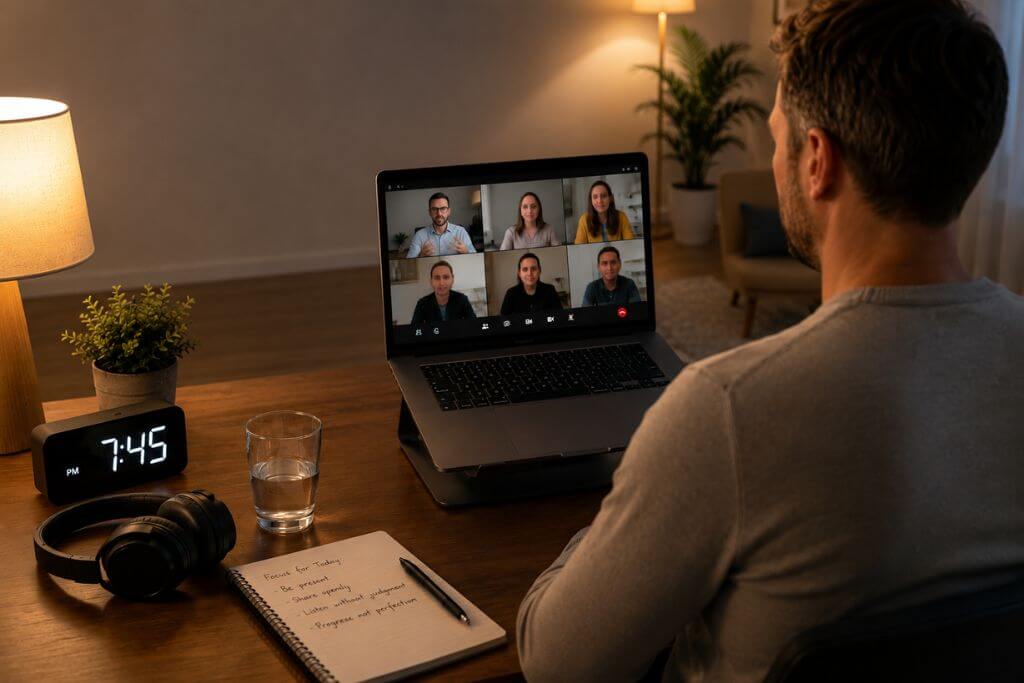
Virtual intensive outpatient programs eliminate the geography problem. At Scioto Wellness Center, serving Columbus and Central Ohio communities, virtual IOP delivers the same evidence-based treatment as in-person programs through secure video sessions you attend from wherever you are. Usually home. Sometimes your office. Occasionally your car during a lunch break.
This isn’t compromise. It’s the same clinical care through a different door.
What Virtual IOP Actually Looks Like
Virtual intensive outpatient programs provide structured treatment through HIPAA-compliant video platforms. The clinical content mirrors in-person IOP: group therapy, individual sessions with your therapist, skills training that you’ll actually use, and medication support when needed. What changes is where you sit during sessions.
The Weekly Structure
A typical virtual IOP schedule at Scioto Wellness includes three sessions weekly, each three hours long, typically Monday, Wednesday, and Friday from 6:00 PM to 9:00 PM. You log into a secure video platform from your computer, tablet, or smartphone. The platform is web-based. If you can join a Zoom meeting, you can attend virtual IOP.
The Reality Check: Virtual IOP still requires nine hours weekly. That’s the same time commitment as in-person programs. What you gain back is commute time. If you’re traveling 30 minutes each way to a facility, that’s six hours per week you reclaim. You finish work at 5:30, eat dinner, and log in at 6:00 from your home office. Done by 9:00 with zero time in traffic.
Each session follows structure. Group therapy occupies most of the time, led by licensed clinicians who facilitate discussion and teach coping skills you’ll use the next day. You’ll also have individual therapy sessions scheduled separately, typically 45 to 60 minutes weekly via the same video platform. Your therapist sees your face, hears your voice, and tracks your progress. The relationship that makes therapy work doesn’t require being in the same room.
Cognitive Behavioral Therapy (CBT), Dialectical Behavior Therapy (DBT), and trauma-informed approaches translate to video without losing effectiveness. The therapeutic techniques don’t require physical presence. What matters is the clinical relationship, the skills being taught, and your willingness to engage with the process.
For people managing opioid use disorder or alcohol dependence, medication-assisted treatment integrates smoothly with virtual IOP. You meet with a prescriber via video for medication management. Your prescription goes to whichever pharmacy you choose. The clinical support happens through the screen. The medication supports your brain chemistry. Together, they work.
What the Research Actually Shows
The question everyone asks: “Is this as good as going in person?”
The evidence says yes. A 2020 study published in the Journal of Substance Abuse Treatment examined virtual intensive outpatient programs for addiction treatment and found effectiveness equivalent to traditional in-person IOPs. Patients in virtual programs reported higher satisfaction rates, primarily due to increased flexibility, improved accessibility, and reduced wait times for starting treatment.
What That Means: Virtual IOP produces the same clinical outcomes as in-person IOP. Patients complete treatment at similar rates. They report similar reductions in symptoms and substance use. They maintain sobriety at comparable levels after treatment ends. The modality doesn’t change the results.
The therapeutic models that work in person translate to video effectively. CBT helps you identify and change thought patterns whether you’re sitting across from a therapist or seeing them on screen. DBT skills for distress tolerance and emotion regulation don’t require physical presence to learn and practice. You still learn them. You still practice them. They still work.
What patients report liking more about virtual format: convenience, privacy, and the ability to integrate treatment into daily life without restructuring everything. What they report as harder: maintaining focus during long video sessions and feeling less connected to other group members initially. Most people adjust within the first week.
Why This Works for Working Professionals
The elimination of commute time is the obvious benefit. What’s less obvious is how much mental space that creates. You’re not calculating whether you can leave work by 5:00 to make a 6:00 session across town. You’re not sitting in traffic rehearsing what you’ll say in group while your anxiety builds. You’re not exhausted before treatment even starts.
You finish work. You transition. You show up for treatment with more energy to actually engage.
Privacy That Actually Protects You
Your coworkers don’t see patterns in your schedule because your schedule hasn’t changed. You’re not leaving early three days per week. You’re not arriving late the next morning because last night’s session ran long and you hit traffic on the way home. From your workplace’s perspective, nothing has changed.
Federal privacy laws protect your treatment information regardless of format. HIPAA governs the confidentiality of all health information. For addiction treatment, 42 CFR Part 2 provides additional protections specifically for alcohol and drug use disorder records. These laws mean your treatment information cannot be disclosed without your explicit written consent.
The virtual format adds a layer of practical privacy. You attend sessions from home. No one sees you entering or leaving a treatment building. You don’t risk running into your boss’s spouse in the parking lot. Your insurance Explanation of Benefits lists the service as “behavioral health” or “outpatient mental health” without specifying that it’s intensive treatment.
The Americans with Disabilities Act protects employees from discrimination based on disabilities, which include addiction in recovery and mental health conditions. You’re not legally required to disclose treatment to your employer. Virtual IOP makes it easier to avoid disclosure entirely because the treatment doesn’t visibly impact your work schedule or location.
How It Fits Into Your Actual Life
Virtual IOP accommodates work schedules in ways that physical attendance sometimes cannot. Evening sessions at 6:00 PM work for most 9-to-5 schedules. If you have a late meeting that runs until 6:30, you can join late from your office rather than missing the entire session or scrambling to drive across town.
Many working professionals report that maintaining employment during treatment supports their recovery. Work provides routine, purpose, income, and identity. Virtual IOP preserves those stabilizing factors while adding intensive clinical support.
You also apply what you learn in treatment immediately. You practice distress tolerance skills at work the day after learning them in group. You use coping strategies for cravings during lunch breaks. You notice the thought patterns your therapist pointed out while they’re actually happening. The integration of treatment and daily life happens naturally because you’re living your regular life while getting treatment, not putting life on pause to go somewhere for treatment.
The Technology and Space Requirements
The technology barrier is lower than most people expect. You need a smartphone, tablet, or computer with a working camera and microphone. You need internet service reliable enough for video calls. If you’ve had a video call for work, your internet is fine. The video platform is typically web-based, accessed through any standard internet browser.
Scioto Wellness provides connection instructions and technical support before your first session. There’s usually a practice session to make sure everything works. If you encounter technical issues during a session, there’s a support number to call.
Insurance Coverage: Most commercial insurance plans, including Aetna, UnitedHealthcare, Anthem Blue Cross Blue Shield, and Cigna, cover virtual IOP at the same rates as in-person IOP. The Mental Health Parity and Addiction Equity Act requires equivalent coverage for telehealth and in-person behavioral health services. Scioto Wellness verifies your insurance benefits before treatment begins and provides clear information about your out-of-pocket costs upfront. No surprises.
Privacy during sessions requires a space where you can speak freely. For most people, that means a bedroom with the door closed, a home office, or even a parked car if necessary. You don’t need a dedicated therapy room or soundproofing. Headphones solve most privacy concerns. From outside the room, it sounds like you’re on a phone call, which is exactly what you want it to sound like.
Virtual IOP at Scioto Wellness Center
Scioto Wellness offers virtual IOP to residents throughout Ohio, including Columbus, Hilliard, Grove City, Dublin, and surrounding Central Ohio communities. The program uses the same evidence-based therapies, licensed clinicians, and treatment structure as in-person IOP. The only difference is the video platform.
When Both Conditions Need Treatment
Many people seeking addiction treatment also manage co-occurring mental health conditions: depression, anxiety, OCD, PTSD, and bipolar disorder. Scioto Wellness specializes in dual diagnosis treatment, which means addressing both conditions simultaneously in one integrated treatment plan.
Traditional addiction programs sometimes operate under the assumption that you need to achieve sobriety first, then deal with mental health later. That approach typically fails because the conditions reinforce each other. You drink because you’re anxious. You’re more anxious because you drink. Treating only one condition leaves the other untreated, which usually leads to relapse in the treated condition.
Integrated dual diagnosis treatment means your therapist understands how your mental health condition and substance use interact. Your treatment plan addresses both. The skills you learn apply to both. You’re not bouncing between an addiction counselor who doesn’t address your depression and a psychiatrist who won’t talk about your drinking. One team, one plan, two conditions.
The Questions Everyone Asks
Is virtual IOP as effective as in-person treatment?
Yes. Research published in peer-reviewed journals shows virtual intensive outpatient programs produce clinical outcomes equivalent to in-person IOPs. A 2020 study in the Journal of Substance Abuse Treatment found no significant differences in effectiveness between virtual and traditional IOP for addiction treatment. Participants in virtual programs reported higher satisfaction due to flexibility and accessibility. The therapeutic relationship forms. The skills transfer. The outcomes match.
Will my employer find out I’m in treatment?
Not unless you choose to tell them. Federal privacy laws, including HIPAA and 42 CFR Part 2, protect your treatment information. The Americans with Disabilities Act protects you from discrimination based on addiction in recovery or mental health conditions. Attending sessions from home eliminates the risk of being seen entering or leaving a treatment facility. Your work schedule remains unchanged. From your employer’s perspective, nothing indicates you’re in treatment.
What if I don’t have a private space at home?
Many people manage this with headphones and a closed door in a bedroom or home office. Some participants join sessions from parked cars during their scheduled session times. One person joined from their basement laundry room with the door locked. Another joined from their garage. The requirement is simply a space where you can speak freely without being overheard for three hours at a time, three times per week. Most people find something that works.
Do I need to live in Ohio to participate?
Yes. Telehealth regulations require healthcare providers to be licensed in the state where the patient is physically located during treatment. Scioto Wellness is licensed to provide services to Ohio residents. If you’re an Ohio resident temporarily out of state, that would need to be discussed with the admissions team on a case-by-case basis.
How much does virtual IOP cost with insurance?
Most commercial insurance plans cover virtual IOP at 60 to 80 percent of costs after you meet your deductible. Your specific out-of-pocket cost depends on your plan’s deductible, copay structure, and whether you’ve met your deductible for the year. Scioto Wellness verifies your specific benefits before treatment begins, providing clear information about your expected out-of-pocket costs upfront. You’ll know the cost before you start.
Can I switch between virtual and in-person IOP if needed?
Yes. Scioto Wellness offers both virtual and in-person IOP options. If your circumstances change or you discover that one format serves you better than the other, your treatment team can help you transition between formats while maintaining continuity of care. Your therapist stays the same. Your treatment plan stays the same. Only the location changes.
What happens if I need to miss a session?
Life happens. Work emergencies, family obligations, and illness. The expectation is that you attend all scheduled sessions, but the program understands that’s not always possible. If you need to miss a session, you notify your therapist as soon as possible. Depending on the reason and frequency, you might need to make up the session, extend your program slightly, or just continue with the next scheduled session. Consistent attendance matters for outcomes, but one missed session doesn’t derail your treatment.
Comparing Your Options
| Treatment Format | Weekly Time | Location | Privacy | Best For |
| Virtual IOP | 9 hours (3 evenings) | From home | Very High | Working professionals needing flexibility and privacy |
| In-Person IOP | 9 hours (3 evenings) | Must commute | Moderate | People preferring face-to-face interaction or needing separation from home environment |
| Residential Treatment | 24/7 (live at facility) | Away from home | Variable | Severe cases needing 24-hour supervision or unable to maintain safety at home |
| Individual Therapy | 1 hour weekly | Flexible | High | Maintenance after IOP or concerns manageable with weekly support |
The Key Distinction: Virtual IOP provides the same nine hours of weekly treatment, the same clinical content, and the same evidence-based therapies as in-person IOP. What changes is eliminating commute time and increasing schedule flexibility. Research shows equivalent clinical outcomes between delivery formats. Your choice should be based on which format better fits your life circumstances and learning preferences, not on which one you think will work better clinically. They both work.

What Happens When You Actually Call
If you’ve been postponing treatment because the logistics felt impossible, virtual IOP removes most of those obstacles. You don’t commute. You don’t rearrange your work schedule. You don’t risk running into someone you know. The barriers that had nothing to do with your readiness for treatment stop being barriers.
The first step is a phone call or online inquiry. Call Scioto Wellness at (888) 351-9849 or submit an insurance verification form on the website. That initial contact is not a commitment to start treatment. It’s a conversation to determine whether virtual IOP might be appropriate for what you’re dealing with and what you need.
When you reach out, you’ll talk with an admissions coordinator who can answer questions about the program structure, technology requirements, schedule options, and insurance coverage. They’ll explain what virtual IOP looks like in practice. If you’re ready to move forward with an assessment, you’ll schedule an intake appointment, typically conducted via video, which takes 60 to 90 minutes.
The assessment is thorough. The clinician reviews your history with substance use if that’s relevant, current concerns, mental health symptoms, previous treatment history, if any, and your goals for treatment. Based on that evaluation, the clinician recommends a level of care. Sometimes that’s virtual IOP. Sometimes it’s in-person IOP. Sometimes it’s PHP because you need more intensive support. Sometimes it’s weekly individual therapy because IOP would be more than you need. The recommendation reflects clinical judgment about what will actually work for you, not which program the center wants to fill.
Virtual IOP gives you permission to get help without dismantling the professional life you’ve built. The treatment fits into your existing routine rather than requiring you to restructure everything around treatment. You’re not choosing between your career and your recovery. You’re not choosing between being present for your family and getting help. You’re choosing treatment that allows you to do both.
The question isn’t whether you’re “bad enough” to need this level of treatment. The question is whether the level of support you’re currently getting matches the level of difficulty you’re experiencing. If weekly therapy isn’t enough, if you’re researching treatment at 11 PM because you know something needs to change, if the thought of commuting to a facility three nights a week is the only thing stopping you from calling, then virtual IOP might be exactly what you need.
If you’re ready to find out, call (888) 351-9849 or verify your insurance online. The conversation is confidential. There’s no pressure. It might be the call that changes everything.