
You know the medication would help. Your doctor mentioned Suboxone months ago. You’ve read about naltrexone. You understand that medication-assisted treatment has strong evidence behind it.
But the logistics stop you before you even start.
Daily trips to a methadone clinic don’t work with a 9-to-5 job. Taking time off for weekly appointments raises questions you’d rather not answer. The whole thing feels impossible to fit into a working life.
What if you could access medication-assisted treatment the same way you’d manage any other medical condition? With prescriptions filled at a regular pharmacy, appointments scheduled around your work, and treatment that doesn’t require disclosure to your employer?
Office-based medication-assisted treatment makes this possible. At Scioto Wellness Center in Hilliard, serving Columbus and surrounding Ohio communities, MAT for opioid and alcohol use disorders integrates into your existing life rather than requiring you to restructure everything around daily clinic visits.
Understanding Medication-Assisted Treatment
Medication-assisted treatment combines FDA-approved medications with counseling and behavioral therapies. The medications address the physiological aspects of addiction: reducing cravings, normalizing brain chemistry, and in some cases blocking the euphoric effects of opioids or alcohol.
The therapy component addresses the psychological, behavioral, and social factors that contribute to substance use. Combined, medication and therapy produce better outcomes than either approach alone. That’s not an opinion. It’s what decades of research consistently show.
FDA-Approved Medications for Opioid Use Disorder
Three medications have FDA approval for treating opioid use disorder: buprenorphine, methadone, and naltrexone. Each works differently, and each comes with different logistical requirements.
Buprenorphine (commonly prescribed as Suboxone) is a partial opioid agonist. It reduces cravings and withdrawal symptoms without creating significant euphoria. The ceiling effect means taking more doesn’t increase the effect beyond a certain point, which reduces misuse potential and overdose risk.
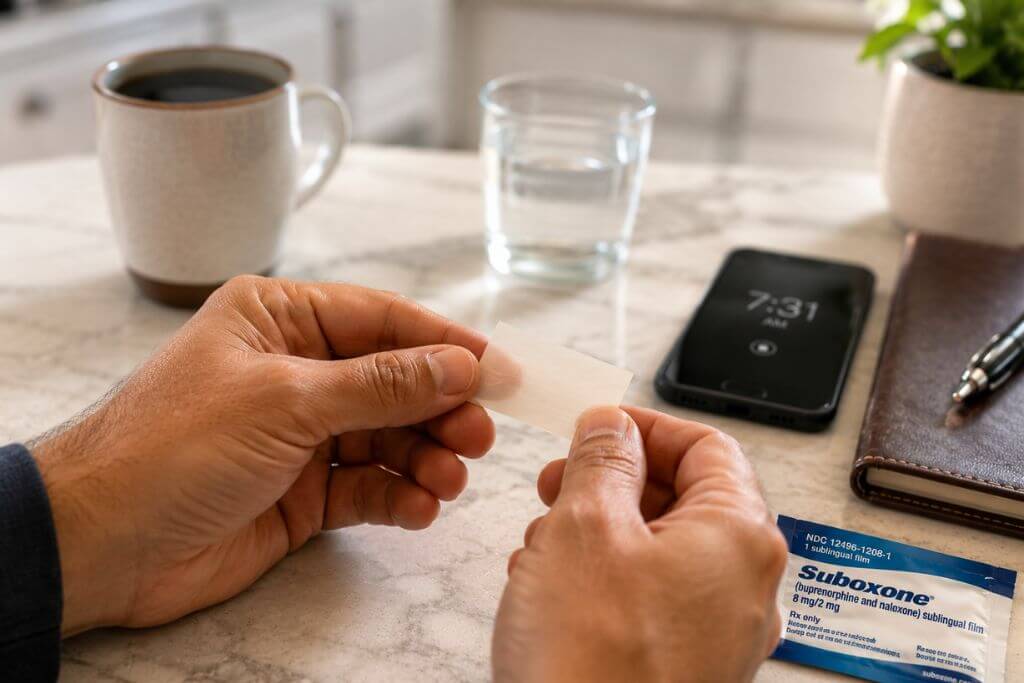
Buprenorphine can be prescribed by any healthcare provider with DEA registration for Schedule III medications. You take it daily at home, typically as a sublingual film that dissolves under your tongue. Extended-release injectable forms offer weekly or monthly dosing that eliminates daily medication management entirely.
For working professionals, buprenorphine is often the most practical option. No daily clinic visits. No explaining a rigid schedule to your employer. You fill the prescription at your regular pharmacy and take it at home.
Methadone is a full opioid agonist that eliminates withdrawal symptoms and reduces cravings. Methadone must be dispensed daily at specialized opioid treatment programs (OTPs), at least initially. This daily clinic requirement makes it less compatible with full-time employment, though take-home doses become available over time for people who demonstrate stability.
Naltrexone (available as daily oral tablets or monthly Vivitrol injections) blocks opioid receptors, preventing euphoria if opioids are used. The monthly injectable form requires a clinic visit but eliminates daily medication management. Naltrexone requires complete opioid detoxification before starting, typically 7 to 14 days of abstinence, which can be the hardest part for some people.
FDA-Approved Medications for Alcohol Use Disorder
Three medications have FDA approval for alcohol use disorder: naltrexone, acamprosate, and disulfiram.
Naltrexone blocks opioid receptors involved in alcohol’s rewarding effects, reducing cravings and pleasurable sensations from drinking. Available as daily oral tablets or monthly Vivitrol injections, it doesn’t require detoxification before starting when used for alcohol use disorder. This makes it easier to begin treatment quickly.
Acamprosate helps restore normal brain chemistry disrupted by chronic alcohol use. Taken three times daily after completing alcohol detoxification, it’s particularly useful for people with liver disease because it’s processed by the kidneys instead.
Disulfiram creates an unpleasant physical reaction if alcohol is consumed. Taken daily, it works as a deterrent rather than reducing cravings. Some people find this helpful. Others don’t want treatment that relies on creating an aversive reaction.
How MAT Supports Working Professionals
The primary barrier medication-assisted treatment removes for working professionals is the daily clinic requirement. With office-based MAT, you’re not making daily trips to a facility, missing work for appointments, or trying to explain a rigid treatment schedule to your employer.
Office-Based Opioid Treatment
Office-based opioid treatment functions like any other outpatient medical care. You meet with a prescriber for an initial evaluation. If medication is appropriate, you receive a prescription sent to your pharmacy of choice. You fill it like any other prescription and take it at home.
Follow-up appointments occur every two to four weeks initially, then potentially less frequently as you stabilize. These appointments can often be scheduled during lunch breaks, before work, or via telehealth.
This model protects your privacy and employment. Your coworkers don’t see you leaving for daily appointments. Your employer doesn’t need to know you’re managing a medical condition unless you choose to disclose.
Office-based MAT eliminates daily clinic visits. Buprenorphine is taken at home daily or received as weekly/monthly injections. Naltrexone is taken at home daily or received as monthly injections. Appointments occur every 2-4 weeks, often schedulable outside work hours or via telehealth. Prescriptions are filled at regular pharmacies.
Evidence for MAT Effectiveness
Research consistently demonstrates that medication-assisted treatment reduces overdose deaths, improves treatment retention, and supports long-term recovery better than behavioral therapy alone.
National Institutes of Health research shows MAT reduces overdose deaths by up to 50 percent. For opioid use disorder, methadone and buprenorphine reduce overdose mortality by approximately 50 percent compared to no treatment or naltrexone-only approaches.
Treatment retention improves significantly when medication is included. People stay in treatment longer when medications reduce the physical discomfort of cravings and withdrawal. The evidence is particularly strong for agonist medications like methadone and buprenorphine, which have decades of research demonstrating their effectiveness.
This matters because the longer someone stays in treatment, the better their outcomes. It’s not complicated. Medication makes it easier to stay. Staying in treatment gives therapy time to work.
Research Summary: MAT reduces overdose deaths by up to 50% and significantly improves treatment retention. Methadone and buprenorphine show strongest evidence for opioid use disorder. All three FDA-approved medications (methadone, buprenorphine, naltrexone) are safe and effective when used appropriately.
Integration with Counseling
Medication addresses the physiological aspects of addiction. Counseling addresses the psychological, behavioral, and social dimensions. Integrated treatment combining both produces better outcomes than either alone.
At Scioto Wellness, medication management coordinates with cognitive behavioral therapy, group therapy, and intensive outpatient programs when indicated. The prescriber and therapist communicate regularly. Your treatment plan reflects a unified approach rather than fragmented care.
You’re not seeing a prescriber at one place and a therapist somewhere else, hoping they’re on the same page. Everything happens in coordination.
Practical Considerations for Working Professionals
Workplace Privacy and Legal Protections
You are not required to disclose medication-assisted treatment to your employer. Federal privacy laws protect your medical information. HIPAA prevents healthcare providers from sharing your treatment details without explicit written permission. For substance use disorder treatment, additional protections under 42 CFR Part 2 restrict disclosure even further.
The Americans with Disabilities Act (ADA) protects employees with disabilities, which includes people in recovery from substance use disorders. If you choose to disclose your treatment and request accommodations, you’re protected from discrimination. However, disclosure is your choice, not a requirement.
Office-based MAT makes non-disclosure easier because the treatment doesn’t visibly impact your work schedule. Taking medication at home eliminates the need to explain daily clinic visits.
Insurance Coverage
Most commercial insurance plans cover medication-assisted treatment, including the medications and associated counseling. Mental Health Parity requirements mean insurers must cover substance use disorder treatment, including MAT, at levels comparable to medical benefits.
Scioto Wellness verifies insurance benefits before treatment begins, so you know exactly what your out-of-pocket costs will be. No surprises six weeks into treatment when bills start arriving.
Duration of Treatment
There’s no predetermined timeline for how long someone should remain on medication-assisted treatment. Research shows that a longer duration of medication support improves outcomes. People who stay on medications like buprenorphine or naltrexone longer have lower relapse rates and a lower risk of overdose death.
Some people remain on MAT for months. Others continue for years. Some eventually taper off medication. Others maintain long-term medication as ongoing management of a chronic condition, similar to taking medication for diabetes or high blood pressure.
The decision should be made collaboratively between you and your prescriber, not based on arbitrary timelines or someone else’s opinion about how recovery “should” look.
Common Questions About MAT
Will MAT show up on workplace drug tests?
Standard 5-panel drug screens typically don’t test for buprenorphine or naltrexone. However, extended panels sometimes include buprenorphine. If you’re subject to workplace drug testing, discuss this with your prescriber and consider disclosing your legitimate prescription to your employer’s medical review officer (MRO). Federal regulations protect people taking prescribed medications for legitimate medical purposes.
How quickly does MAT start working?
Buprenorphine often reduces cravings and withdrawal within hours of the first dose. Naltrexone’s effects may take days to weeks. Acamprosate for alcohol use disorder typically takes several days to a week to show benefit. The medications work differently, so the timeline varies.
What if MAT isn’t enough?
Medication addresses cravings and withdrawal but doesn’t automatically resolve underlying issues. If you’re on MAT but still struggling, stepping up to intensive outpatient treatment or partial hospitalization while continuing medication may be appropriate. MAT and intensive therapy work synergistically. One doesn’t replace the other.
Will I feel “high” or sedated?
Buprenorphine produces minimal euphoria at therapeutic doses. Most people feel “normal” rather than high or sedated. Naltrexone produces no euphoria. The goal is stabilization, not intoxication. You should be able to work, drive, and function normally.
MAT Medications Comparison
| Medication | Use For | Administration | Schedule Flexibility | Key Benefit |
| Buprenorphine (Suboxone) | Opioid use disorder | Daily at home or weekly/monthly injection | High (home-based) | Reduces cravings without euphoria |
| Naltrexone/Vivitrol | Opioid and alcohol use disorder | Daily at home or monthly injection | High (monthly injection) | Blocks euphoria, protective barrier |
| Methadone | Opioid use disorder | Daily at clinic initially | Low (daily visits) | Strong craving reduction |
| Acamprosate | Alcohol use disorder | 3x daily at home | Moderate | Safe for liver disease |
Key Insight: Office-based medications (buprenorphine, naltrexone, and acamprosate) provide the flexibility working professionals need to maintain employment while receiving evidence-based treatment.

Getting Started with MAT at Scioto Wellness
If you’ve been considering medication-assisted treatment but weren’t sure how it would work with your job, the answer is it works because it’s designed to accommodate normal life, including full-time employment.
The first step is scheduling an intake assessment. Call Scioto Wellness at (888) 351-9849 or request an appointment online. The assessment can often be conducted via telehealth video, which means you don’t even need to take time off work for the initial conversation.
During the assessment, you’ll discuss your history with substance use, previous treatment attempts, current symptoms, and goals. The prescriber will determine whether MAT is appropriate and which medication might work best for your situation.
If buprenorphine is recommended, you can often start the same day or within a few days. You’ll receive a prescription sent to your pharmacy. Follow-up appointments are scheduled, typically every two to four weeks initially.
Integrating MAT with Other Treatment
Many people benefit from combining MAT with counseling or intensive outpatient treatment. If you’re starting MAT and also need support for underlying mental health conditions like depression or anxiety, Scioto’s integrated approach addresses both simultaneously.
Individual therapy can also be scheduled in coordination with your medication management. If you’re dealing with trauma that’s connected to your substance use, trauma-informed care works alongside MAT to address root causes.
The medication stabilizes the physiological aspects of addiction. Therapy builds the psychological skills for long-term recovery. The combination is more effective than either alone. That’s the point of integrated treatment.
Take the First Step
Medication-assisted treatment works best when it’s paired with consistent therapeutic support rather than managed in isolation. At Scioto, MAT can be coordinated alongside our intensive outpatient program, which includes group sessions, individual counseling, and relapse prevention, all scheduled to minimize disruption to your workday. For professionals who need a more intensive support structure alongside their medication regimen, our partial hospitalization program offers full-day treatment with the same clinical team while still allowing you to return home each evening.
Medication-assisted treatment isn’t admitting defeat. It’s using evidence-based medical care to address a medical condition. Substance use disorders respond to medication just like other chronic conditions. There’s no moral failure in treating them that way.
Office-based MAT removes the logistical barriers that prevent working professionals from accessing treatment. You maintain your job. You protect your privacy. You receive care that’s proven to reduce cravings, prevent relapse, and support long-term recovery.
The medication doesn’t do the work for you, but it makes the work possible. It reduces the physical discomfort that often derails early recovery. It creates space for you to engage with therapy, rebuild relationships, and develop healthier patterns.
If you’re ready to explore whether medication-assisted treatment might help, call Scioto Wellness at (888) 351-9849 or verify your insurance online. The conversation is confidential, and the first step is simply gathering information to make an informed decision about your care.
You don’t need perfect words to call. You just need to be ready to have an honest conversation about what’s been happening and what might help.