
You probably don’t need to worry about whether your insurance covers addiction treatment. Under federal law, it does.
The real questions are simpler: what exactly gets covered, how much will this cost me, and what’s the process for getting started?
For working professionals with commercial insurance through employers like Aetna, Blue Cross Blue Shield, UnitedHealthcare, Cigna, or Anthem, addiction treatment coverage exists because federal law requires it. Understanding how to use that coverage makes the difference between accessing treatment easily and spending weeks stuck in administrative delays.
At Scioto Wellness Center in Hilliard, serving Columbus and surrounding Ohio communities, we verify insurance benefits before treatment begins so you know exactly what you’ll pay. Most commercial insurance plans cover intensive outpatient programs, medication-assisted treatment, and individual therapy with predictable out-of-pocket costs.
Why Commercial Insurance Must Cover Addiction Treatment
Your insurance covers addiction treatment for the same reason it covers broken bones or diabetes care. It’s the law.
The Affordable Care Act made mental health and substance use disorder services essential health benefits. The Mental Health Parity and Addiction Equity Act (MHPAEA) requires health insurance plans to cover addiction treatment at levels comparable to medical and surgical care. If your plan covers outpatient medical care with 20 percent coinsurance after your deductible, it must cover outpatient addiction treatment with similar financial terms.
What Mental Health Parity Actually Means for You
Mental Health Parity means equal treatment in practice, not just on paper.
Deductibles for addiction treatment combine with medical deductibles. You don’t hit separate deductibles. Copays and coinsurance for behavioral health cannot exceed those for medical services. If your specialist copay is $40, your therapist copay can’t be $100. Treatment limitations cannot be stricter for addiction treatment. Out-of-network coverage must exist if medical out-of-network coverage exists.
Insurance Quick Facts: Commercial insurance plans cover detoxification, residential treatment, intensive outpatient programs (IOP), outpatient therapy, and medication-assisted treatment (MAT). Coverage typically runs 70 to 80 percent after the deductible for in-network providers. Most plans require prior authorization only for residential treatment, not IOP or outpatient care.
Insurance companies cannot deny coverage or charge higher premiums based on pre-existing conditions, including addiction or mental health diagnoses. Your coverage remains the same whether this is your first time seeking substance use disorder treatment or you’ve been in treatment before.
What Commercial Insurance Typically Covers
Detoxification: Medical detox for alcohol or opioid withdrawal, covered as inpatient hospital care. Usually requires prior authorization. Coverage is typically 70 to 80 percent after the deductible.
Residential Treatment: 24-hour programs, typically 30 to 90 days. Almost always requires prior authorization. Coverage similar to inpatient medical care.
Intensive Outpatient Programs (IOP): 9 hours per week of structured group and individual therapy. Often does not require prior authorization. Covered at 70 to 80 percent after the deductible for in-network providers. You can keep working while attending IOP. Programs typically meet evenings or flexible daytime hours.
Outpatient Therapy: Individual counseling sessions, usually weekly. Typically covered with a copay ($20 to $50) or coinsurance (20 to 30 percent) after the deductible.
Medication-Assisted Treatment: MAT medications like Suboxone, naltrexone, or Vivitrol covered under prescription drug benefits. Office visits with prescribers covered as outpatient medical care. Your insurance covers MAT just like blood pressure medication or insulin.
Dual Diagnosis Treatment: Integrated treatment for co-occurring conditions like anxiety or depression and addiction, covered at the same rates as standalone addiction treatment. Comprehensive dual diagnosis care addresses both simultaneously.
Pre-Authorization Requirements
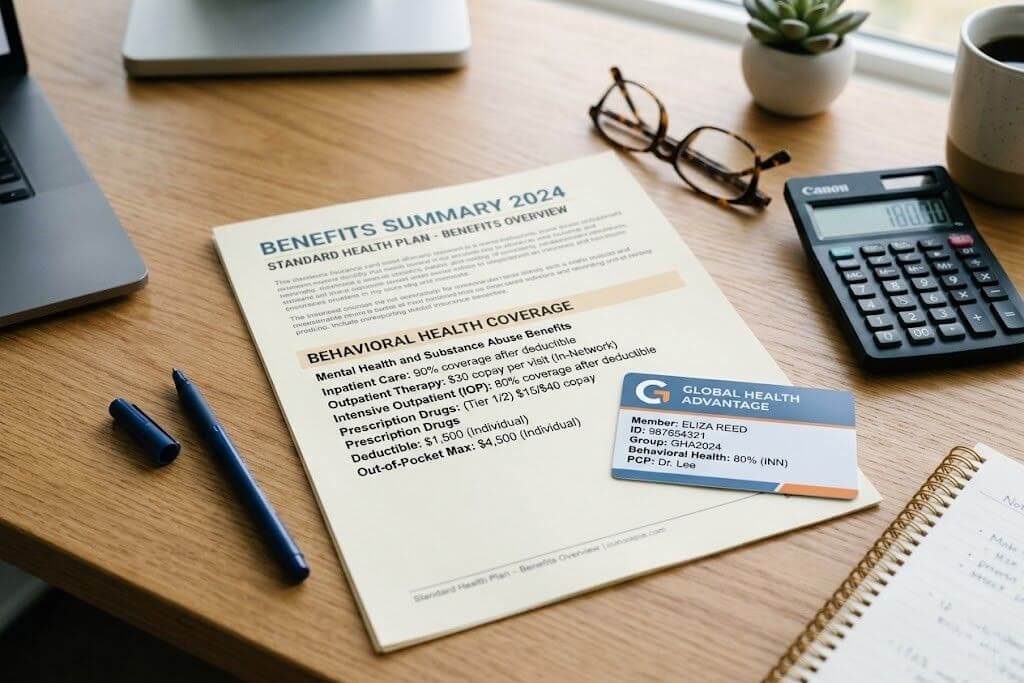
Pre-authorization requirements vary by plan and level of care. The treatment center typically handles this on your behalf. At Scioto, this process usually takes 24 to 48 hours for IOP.
Usually requires pre-authorization: residential treatment programs, partial hospitalization programs (PHP), and medical detoxification.
Often does not require pre-authorization: Intensive outpatient programs (IOP), standard outpatient therapy, and medication management appointments.
In most cases, if you meet medical necessity criteria, authorization gets approved. The insurance company is verifying that the level of care matches your needs, not deciding whether addiction treatment in general is covered.
Understanding Your Out-of-Pocket Costs
Your total out-of-pocket costs depend on four numbers: your deductible, coinsurance percentage, copays, and out-of-pocket maximum.
Deductible: The amount you pay before insurance starts covering services. Many plans have combined medical and behavioral health deductibles ranging from $500 to $3,000 for individual coverage. If you’ve already met your deductible through other medical care this year, your addiction treatment costs start at the coinsurance level immediately.
Coinsurance: Your share of costs after meeting the deductible. Typical behavioral health coinsurance is 20 to 30 percent for in-network providers. Real example: IOP at Scioto costs approximately $350 per session. If your coinsurance is 20 percent and you’ve met your deductible, you pay $70 per session. Insurance covers the remaining $280.
Copays: Fixed amounts per visit, common for outpatient therapy. Behavioral health copays typically range from $20 to $50 per session.
Out-of-Pocket Maximum: The most you’ll pay in a year. Once you reach this amount (typically $3,000 to $8,000 for individual coverage), insurance covers 100 percent of covered services.
In-Network vs Out-of-Network
Staying in-network significantly reduces your costs. In-network providers have contracted rates with insurance companies. Your coinsurance applies to these lower contracted rates. Out-of-network providers often result in 40 to 50 percent coinsurance instead of 20 to 30 percent, and those costs may not count toward your deductible or out-of-pocket maximum.
Scioto Wellness is in-network with major commercial insurance carriers serving Ohio, including Aetna, Blue Cross Blue Shield, Anthem, UnitedHealthcare, and Cigna.
How to Verify Your Coverage Before Treatment
Verifying benefits in advance eliminates surprises. You have two options: call your insurance company yourself, or let the treatment center handle verification for you.
What to Ask Your Insurance Company
When you call the customer service number on your insurance card, ask specifically about behavioral health coverage:
- Is intensive outpatient treatment covered under my plan?
- What’s my deductible, and how much have I met this year?
- What’s my coinsurance percentage for outpatient behavioral health services?
- Does intensive outpatient treatment require prior authorization?
- Is Scioto Wellness Center in Hilliard, Ohio, in-network with my plan?
- What’s my out-of-pocket maximum, and how much have I used this year?
Write down the representative’s name, date, and reference number. This documentation protects you if there are discrepancies later.
Let the Treatment Center Verify for You
Most people find it easier to have the treatment center verify benefits directly. When you contact Scioto Wellness, our billing team contacts your insurance company and explains your specific costs before you commit to treatment.
We speak the insurance language fluently. We know which questions to ask and how to get accurate information about your specific plan. This verification includes confirming your coverage is active, determining how much of your deductible you’ve met, identifying your coinsurance percentage, checking authorization requirements, calculating estimated costs, and confirming we’re in-network.
Common Insurance Questions
Will my employer find out if I use insurance for addiction treatment?
No. HIPAA privacy laws prevent insurance companies from disclosing your treatment details to your employer. Your Explanation of Benefits (EOB) lists services as “behavioral health” without specifying addiction treatment. Your employer sees that you used health insurance, but they don’t see what for.
Can I use insurance for virtual IOP or telehealth therapy?
Yes. Most commercial plans cover telehealth behavioral health services at the same rates as in-person care.
What if I haven’t met my deductible yet?
You’ll pay the full contracted rate until your deductible is met, after which coinsurance applies. But here’s the reality: the cost of continuing untreated addiction typically far exceeds the deductible savings from waiting. Treatment works best when started when you’re ready. Many treatment centers, including Scioto, offer payment plans.
Does insurance cover medication-assisted treatment?
Yes. MAT medications are covered under prescription drug benefits. Office visits with prescribing physicians are covered as outpatient medical visits. Coverage for MAT is specifically protected under Mental Health Parity requirements.
Coverage by Major Commercial Carriers
| Insurance Carrier | IOP Coverage | Pre-Auth for IOP? | Typical Coinsurance | MAT Covered? |
| Aetna | Yes | Usually No | 20-30% | Yes |
| BCBS Ohio | Yes | Usually No | 20-30% | Yes |
| UnitedHealthcare | Yes | Usually No | 20-30% | Yes |
| Cigna | Yes | Usually No | 20-30% | Yes |
| Anthem | Yes | Usually No | 20-30% | Yes |
Coverage Insight: All major commercial carriers cover intensive outpatient programs with similar financial terms: 70 to 80 percent coverage after deductible for in-network providers. The specific percentages depend on your individual plan, not the insurance company name. Always verify your specific coverage before starting treatment.

Taking the First Step
Understanding insurance coverage is important. But it shouldn’t delay treatment when you’re ready to start.
The verification process takes 24 to 48 hours and gets handled by the treatment center on your behalf. You don’t need to become an insurance expert before calling. You just need to take the first step.
If you’re ready to explore addiction treatment at Scioto Wellness, call (888) 351-9849 or request a confidential insurance verification online. Our billing team contacts your carrier to determine your exact coverage and out-of-pocket costs. This verification is free, confidential, and doesn’t commit you to treatment.
What Happens After Verification
Once benefits are verified, you receive a clear breakdown: your remaining deductible, your coinsurance percentage, estimated cost per IOP session, total estimated costs for a typical program length, whether prior authorization is required, and expected timeline for starting treatment (often within 3 to 7 days).
No confusion. No insurance jargon. Just clear information so you can make informed decisions about your care.
Your Coverage Is Better Than You Think
In Ohio, most commercial insurance plans are required to cover outpatient behavioral health programs at parity with medical care. That includes Scioto’s intensive outpatient program, which typically does not require prior authorization and is covered by most major insurers in-network. For those stepping down from inpatient or detox, our partial hospitalization program provides the same medically supervised structure at an outpatient level, and most insurers authorize it with a single clinical review call.
Most working professionals with employer-sponsored commercial insurance have strong addiction treatment coverage. The combination of ACA requirements and Mental Health Parity protections means your plan likely covers intensive outpatient treatment, medication-assisted treatment, and ongoing therapy at costs similar to other medical care.
The barrier usually isn’t coverage. It’s understanding how to access that coverage and moving forward with verification rather than postponing.
Your insurance coverage exists to be used when you need it. Taking the step to verify benefits moves you from thinking about treatment to actually accessing care.
If you’re ready to verify your insurance coverage and explore whether intensive outpatient treatment at Scioto Wellness is right for you, call (888) 351-9849. You’ll have clear information about your coverage and costs within 24 to 48 hours. We’re here when you’re ready.