
I used to think if I just said the right thing, if I just showed enough patience, if I just loved him harder—he’d stop.
Stop using. Stop lying. Stop spiraling.
I used to think my job was to fix it all.
Until I finally admitted: I can’t.
And I shouldn’t have to do this alone.
If you’re a parent of a 20-something who’s using again—or slipping in ways you can’t quite name—I hope this gives you something I didn’t have: a real picture of what actually helps, and the truth that you’re not the only one hanging by a thread.
This is the story of how I found a partial hospitalization program in Hilliard, Ohio—and how it changed everything.
When love turns into survival mode
He wasn’t a “bad kid.” He was bright. Sensitive. Funny. He had friends, good grades, and a big heart.
And then—slowly—it started unraveling.
College didn’t work out. Jobs didn’t last. He said he was “just using weed to relax” or “just partying”—but the sparkle in his eyes was gone.
He got better for a while. Then worse. Then different.
One week he’d be motivated, helpful, sober-ish. The next, unreachable. Short-tempered. Half-asleep at 2pm.
I convinced myself it was normal. “Just a phase.” I gave him space. Then I tightened my grip. Then I softened again.
I started adjusting everything to keep the peace.
The day I realized I wasn’t helping anymore
It was a Tuesday. I had called in sick to work (again) because he hadn’t come home the night before. He wasn’t answering his phone.
By noon, I found him at his friend’s place—awake but glassy. Alive, but not really.
That night I sat in the car, holding the wheel so tightly my knuckles went white.
I was exhausted. Resentful. Grieving something I couldn’t name.
That’s when it hit me: I’ve built my whole life around not losing him—but I’m losing myself.
I didn’t know what PHP was—but I’m so glad I asked
I knew about inpatient. Rehab. 30-day programs. I didn’t know there was something between crisis and “just therapy.”
PHP (partial hospitalization program) sits right in the middle. It’s intense, structured treatment—but without full residential stay.
At Scioto Wellness Center, PHP meant:
- Five days a week of treatment (6 hours a day)
- Individual and group therapy
- Support for both mental health and substance use
- Medication management, if needed
- Case coordination, including school/work planning and next steps
He didn’t have to “go away.” But he couldn’t just float, either. It offered the structure I couldn’t provide—and the boundaries I didn’t know how to hold.
The hardest part wasn’t getting him in—it was letting go
I expected resistance. I expected him to say no.
And he did.
But I stayed calm (somehow), handed him the phone number, and said:
“I love you. I’m here. But I can’t do this alone. There are people who know how to help—and I want you to talk to them.”
He called the next day. Not because he was convinced, but because deep down, he was tired too.
That phone call led to an assessment. That assessment led to admission.
And just like that, we weren’t doing this alone anymore.
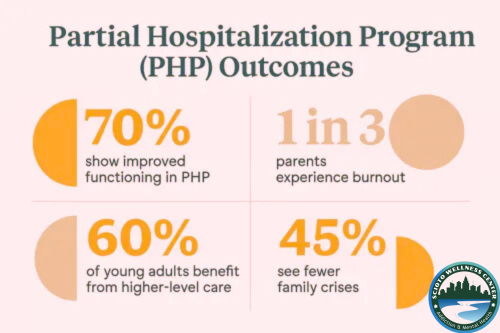
What a partial hospitalization program actually gave us
For him:
- Daily accountability. He had to show up. On time. Every day. That alone broke the cycle of isolation.
- Therapy that went beneath the surface. Not just “stop using,” but why he used, what he was avoiding, and what he actually wanted out of life.
- Peers he couldn’t manipulate. Sitting in a room with other young adults who got it did something I couldn’t do as a parent—disarm him.
- Skills for the real world. Not just recovery language, but coping tools, communication, sleep hygiene, emotional regulation.
For me:
- Family support. I met with a clinician to talk about my trauma, my boundaries, my exhaustion.
- Clarity. I finally understood what was mine to carry—and what wasn’t.
- Space. For the first time in two years, I went to bed without checking the front door 3 times. I breathed.
It wasn’t a miracle. But it was a beginning.
Not everything changed. There were still hard days, tears, resistance.
But now he had a team. And I had backup.
We weren’t two people clinging to each other in a storm—we were walking toward something steadier, one honest day at a time.
By the end of PHP, he said this:
“I didn’t think I was that bad. But now I see I was just stuck. I needed someone to call me out and believe I could do better.”
That sentence? I hadn’t heard anything like it in years.
If you’re scared, tired, or out of ideas—there’s another way
PHP isn’t just a level of care. It’s a lifeline when your child is still reachable—but slipping fast.
It’s a way to interrupt the spiral before the ER visit, the arrest, the overdose.
It’s structured help. Real help. The kind that doesn’t require your child to “hit bottom,” and doesn’t require you to burn out trying to save them.
If you’re in Hilliard or anywhere in Franklin County, Scioto’s PHP might be the right middle ground you didn’t know existed.
What I wish every parent knew
- You don’t need permission to ask for help.
- You don’t have to wait for a crisis.
- You are allowed to be tired—and get support for yourself.
- You’re not weak for setting boundaries. You’re wise.
- Even if your child isn’t ready, you can start healing.
Love doesn’t always look like saving. Sometimes, love looks like stepping back so someone else can step in.
FAQs: Partial Hospitalization Programs for Young Adults
What is a partial hospitalization program (PHP)?
PHP is a structured, short-term treatment program where clients receive care 5 days a week—typically 6 hours per day. It includes therapy, skill-building, psychiatric support, and recovery planning, but clients return home or to sober housing at night.
Is PHP only for people with substance use issues?
No. PHP is designed for people with complex needs—mental health struggles, trauma, emotional dysregulation, or substance use. Many young adults have overlapping challenges, and PHP is built to treat the whole person.
What if my child doesn’t want to go?
You’re not alone. Most don’t. But resistance doesn’t mean they won’t benefit. Many parents start by having their child attend an assessment or consultation. Just getting in the door often shifts everything.
Can I stay involved while my child is in PHP?
Yes. Scioto includes family involvement in treatment planning, education, and communication—so you’re not left in the dark, and your voice is heard.
What happens after PHP ends?
Your child will receive an aftercare plan which may include step-down to IOP (intensive outpatient), individual therapy, peer support, or sober housing. PHP is the beginning of long-term support, not the end.
Is this just another way of “babysitting” them?
Not at all. PHP requires your child to show up, engage, and be accountable. It’s a place where real change happens—with the support of trained clinicians and peers, not just parental willpower.
You don’t have to hold this all by yourself anymore
Call (888) 351-9849 or visit our Partial Hospitalization Program page to explore what real help can look like in Hilliard, Ohio—for your child and for you. Because you both deserve to feel supported, seen, and not so alone.