
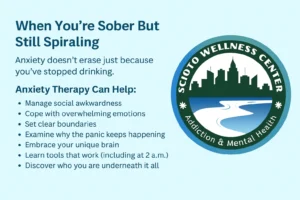
When You’re Sober But Still Spiraling
You got sober—and maybe thought things would magically click into place. But instead, your brain is louder. The social anxiety didn’t leave with the last drink. The racing thoughts didn’t check out after detox. You’re clear-headed, sure, but also hyper-aware, emotionally raw, and stuck in your own head half the time.
What no one really tells you is this: sobriety doesn’t erase anxiety. In fact, for a lot of people, it makes anxiety louder. You’re finally feeling everything—and that includes every awkward moment, every heartbeat, every “do they hate me?” thought that used to be muted by substances.
That’s where therapy comes in. Specifically, anxiety therapy that meets you where you are: sober, trying, and feeling weird about it. This isn’t just about breathing exercises or affirmations. It’s about building actual tools to make your mind and body feel safer now that you’re no longer numbing out.
Here’s how it helps in ways you might not expect.
1. You Learn to Handle Cringe Without Running
You know the feeling. You’re out with people, someone says something dumb, your face flushes, and your whole body wants to disappear. When you were drinking or using, you could override that. Now? It’s all front and center.
Anxiety therapy gives you space to unpack those moments without judgment—and teaches you how to ride them out. You don’t have to bolt from every mildly awkward social setting. You don’t have to over-explain your existence just to feel worthy of being in the room.
Eventually, you realize: you can survive a cringe. And maybe even laugh at it.
2. You Stop Mistaking Every Feeling for a Crisis
In early sobriety, every emotion can feel like a five-alarm fire. You feel anxious and assume something must be wrong. Someone doesn’t text back, and suddenly you’re spiraling into rejection, abandonment, “maybe I’m just too much.”
Anxiety therapy helps you label feelings without assigning them emergency status. You start to differentiate between, “I’m feeling activated,” and “The world is ending.” That distinction alone? Life-changing.
You get to learn how to slow it all down, challenge the fear, and build a tolerance for uncomfortable feelings without being ruled by them.
3. You Learn to Say No Without Apologizing for Existing
Let’s talk about boundaries. Saying “no” to a drink is one thing. Saying “no” to a vibe that feels off, a conversation that spirals you, or a person who triggers old patterns—that’s a whole other level.
Therapy helps you understand why it’s so hard to set limits. It helps you practice what to say, how to say it, and what to do when people don’t love your boundaries. It’s not about being cold. It’s about being clear.
Saying no gets easier when you stop needing everyone to be okay with your choices. And spoiler: they weren’t all okay when you were drinking either.
4. You Get to Explore the “Why” Behind the Panic
Most of us didn’t drink or use just because we liked the taste or the high. We were masking something—fear of being judged, trauma we never processed, the weight of always trying to hold it together.
Anxiety therapy helps you pull apart those roots gently. It’s not about rehashing every wound, but understanding how those unhealed pieces affect your now. You begin to notice when your body is reacting to something from five years ago, not five seconds ago.
This insight helps you respond instead of react. Which makes staying sober feel less like punishment—and more like reclaiming your life.
5. You Learn That “Weird” Doesn’t Mean “Wrong”
Anxiety in sobriety can make you feel like an alien. You’re the one who doesn’t drink. The one who overthinks every text. The one scanning the room while everyone else is “chill.”
But therapy reminds you that different doesn’t mean defective. Feeling deeply is not a disorder. Being aware isn’t a flaw. It’s a gift—one that just needs some tuning.
And that “weird” thing you do—checking exits, rehearsing conversations, obsessing over tone? That’s your nervous system trying to protect you. Therapy helps you thank it, then teach it to chill.
6. It Gives You Something Stronger Than Willpower
Let’s be real: white-knuckling sobriety works… until it doesn’t. You can only grit your teeth through so many panic attacks before burnout hits. Anxiety therapy gives you more than willpower—it gives you skills.
Real tools. Ones you can use at 2 a.m. when your thoughts won’t quit. Ones that work in a crowded room or a quiet night alone. Breathing techniques, grounding exercises, reframing thoughts, understanding triggers—these aren’t magic tricks. They’re survival strategies that actually work.
And the more you use them, the more empowered you feel.
7. You Start to Feel Like You—Not Just the “Sober Version” of You
In early sobriety, everything feels unfamiliar. Who am I at parties now? Who am I when I’m anxious and can’t use? Who am I when I’m not numbing?
Therapy helps you figure that out. Slowly. Safely. You start discovering who you are underneath the anxiety, the coping, the substances. You reclaim your humor. Your interests. Your actual personality—not the version you used to perform to survive.
And that person? They’re real. They’re worthy. And they’re more than enough.
Why It Matters That You Work With Someone Who Gets It
Anxiety therapy in Hilliard, Ohio, isn’t about fixing you. It’s about walking with you while you untangle the noise. At Scioto Wellness Center, we understand that early sobriety can feel like a sensory overload—especially when anxiety is tagging along for the ride.
Whether you’re figuring out who you are without substances, battling panic attacks in silence, or just want someone to talk to who won’t treat you like a broken project—you’re welcome here.
We offer therapy that feels like a conversation, not a lecture. One that respects your intelligence, your hesitation, and your desire to heal on your own terms.
FAQs: Anxiety, Sobriety & Therapy
I already quit drinking. Isn’t that enough?
First off: major props. Seriously. Quitting is huge. But healing doesn’t stop there. Anxiety therapy helps you deal with the underlying stuff that used to get muted by substances. You deserve more than just surviving sobriety—you deserve to feel okay in it.
What if I’ve never done therapy before?
That’s okay. You don’t need to be “good at talking” to start. A good therapist will guide the process, ask thoughtful questions, and move at your pace. You don’t have to have the words. Just show up. That’s more than enough.
What’s different about anxiety therapy vs. regular therapy?
Anxiety therapy focuses specifically on patterns of worry, panic, avoidance, overthinking, and physical symptoms like racing heart, tight chest, etc. It’s targeted support that helps calm both your mind and body.
Can therapy really help with physical anxiety symptoms?
Yes. Therapy can help regulate your nervous system so those “random” chest tightness episodes or stomach flips happen less often—and feel less scary when they do. You’ll learn grounding skills that bring your body back online when it starts to spiral.
Do I have to talk about my past?
Only if and when you’re ready. Anxiety therapy can be present-focused. It’s more about helping you feel safer now. If parts of your past show up, your therapist will help you navigate them gently—no pressure, no rehashing trauma without purpose.
You’re Allowed to Need Support—Even After Getting Sober
You did a hard thing when you got sober. Now it’s okay to do another brave thing: ask for help with the anxiety that’s still hanging around. Because white-knuckling it through every social situation, every overthinking spiral, and every awkward conversation isn’t sustainable.
Call (888) 351-9849 to learn more about our Anxiety Therapy services in Hilliard, Ohio.