
When you’re told you have bipolar disorder but also hear voices, or when your depression comes with delusions that don’t go away, the diagnosis can feel confusing. You might wonder if your treatment team really understands what you’re experiencing. When mood symptoms and psychotic symptoms happen together, they need care that addresses both at the same time.
Understanding Schizoaffective Disorder and Why Integrated Care Matters
If you’ve been through multiple diagnoses or treatments that only helped with part of what you’re experiencing, you’re not alone. Schizoaffective disorder is one of the most commonly misdiagnosed mental health conditions, and finding treatment that addresses both mood episodes and psychotic symptoms can feel overwhelming.
Schizoaffective disorder treatment in Columbus, Ohio, requires a specialized approach because this condition involves both significant mood changes (like depression or mania) and psychotic symptoms (like hallucinations or delusions). At Scioto Wellness Center in Hilliard, we provide integrated care through our Partial Hospitalization Program and Intensive Outpatient Program, designed specifically for people who need support managing both symptom types simultaneously.
Our team understands that you may have been told you have bipolar disorder, only to find that explanation doesn’t fully fit. Or perhaps you’ve been diagnosed with schizophrenia but also experience intense mood episodes. Getting the right diagnosis and treatment plan matters deeply, and finding evidence-based care that treats the complete picture is essential for stability.
We serve Columbus, Hilliard, Grove City, Dublin, and the surrounding Central Ohio area with trauma-informed, comprehensive mental health programs that accept most commercial insurance and Medicaid.
What Is Schizoaffective Disorder?
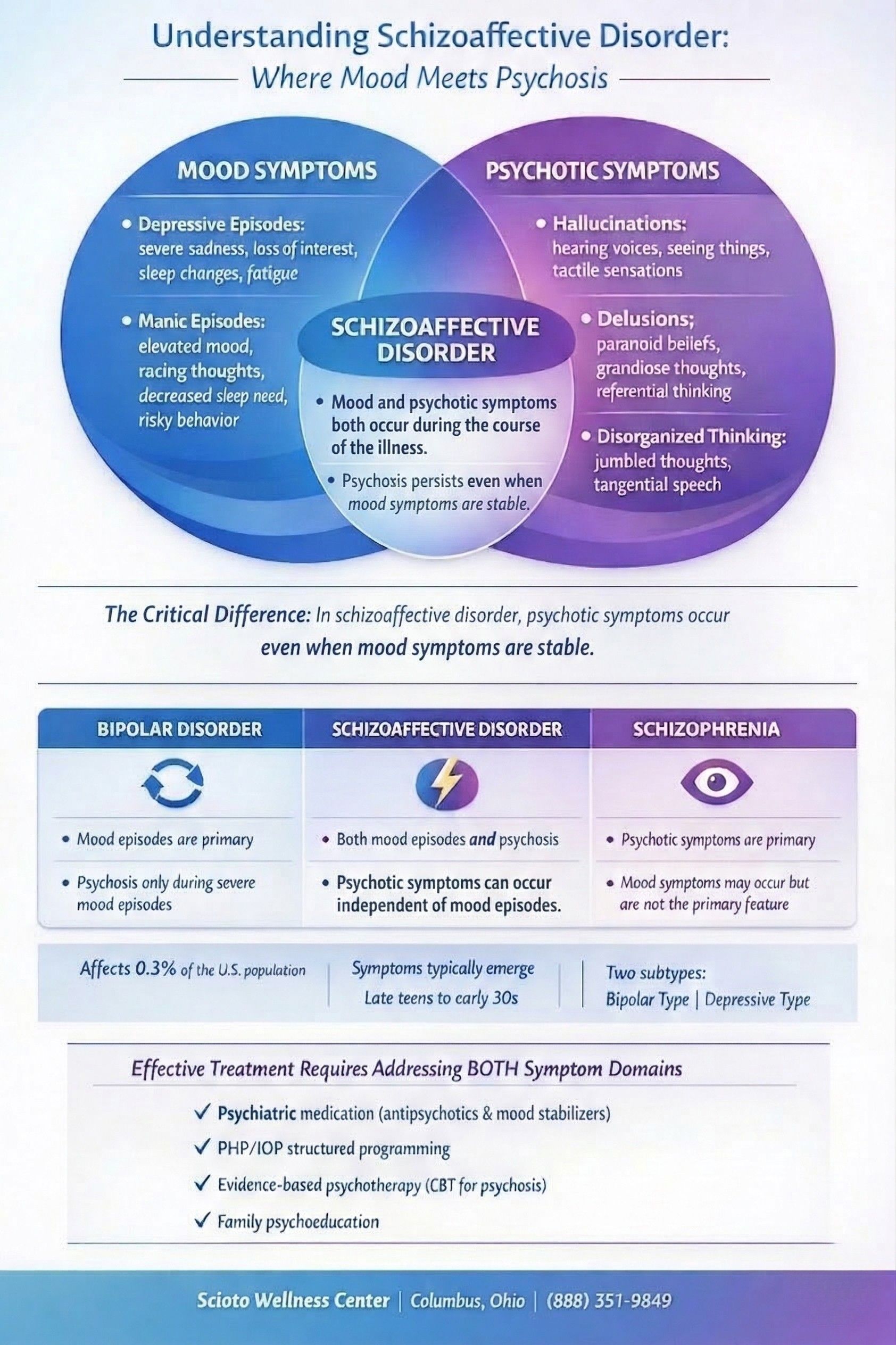
Schizoaffective disorder is a mental health condition where you experience both a mood disorder (major depressive episodes or manic episodes) and psychotic symptoms (hallucinations, delusions, or disorganized thinking). What makes this distinct from other conditions is that psychotic symptoms occur even when your mood is relatively stable.
Schizoaffective disorder treatment in Columbus addresses both mood and psychotic symptoms through integrated psychiatric care, therapy, and structured programming. This combined approach recognizes that treating only depression or only hallucinations leaves half the problem unaddressed.
There are two subtypes:
Bipolar type: You experience manic episodes (periods of elevated mood, increased energy, racing thoughts, and risky behavior) along with psychotic symptoms. You may also have depressive episodes.
Depressive type: You experience major depressive episodes (severe sadness, hopelessness, low energy, difficulty functioning) along with psychotic symptoms, without manic episodes.
Approximately 0.3% of the population has schizoaffective disorder, with symptoms typically appearing in the late teens through early 30s. The condition affects people of all backgrounds and can significantly impact daily functioning without proper treatment.
Why Schizoaffective Disorder Gets Misdiagnosed
The diagnostic confusion happens because schizoaffective disorder sits between bipolar disorder and schizophrenia. Early in the illness, providers may diagnose bipolar disorder with psychotic features if mood episodes are prominent. Others may diagnose schizophrenia if psychotic symptoms dominate the clinical picture.
Studies indicate that schizoaffective disorder is frequently misdiagnosed, with many individuals initially receiving diagnoses of bipolar disorder or schizophrenia alone. The accurate diagnosis matters because it changes how treatment is approached, particularly regarding medication combinations and therapy focus.
If you’ve felt like your diagnosis never quite fit, or if previous treatments helped with some symptoms but not others, requesting a comprehensive psychiatric evaluation may provide the clarity you need.
Signs and Symptoms: Recognizing Both Mood and Psychotic Features
Schizoaffective disorder involves symptoms from two different domains that can happen at the same time or alternate in cycles.
Mood Symptoms
During depressive episodes, you might experience:
- Persistent sadness or emptiness that doesn’t lift
- Loss of interest in activities you used to enjoy
- Significant changes in sleep (sleeping too much or struggling with insomnia)
- Changes in appetite or weight
- Fatigue or loss of energy
- Feelings of worthlessness or excessive guilt
- Difficulty concentrating or making decisions
- Thoughts of death or suicide
During manic episodes (bipolar type), you might experience:
- Elevated or irritable mood lasting several days
- Decreased need for sleep without feeling tired
- Racing thoughts or rapid speech
- Increased activity or agitation
- Engaging in risky behaviors (spending sprees, impulsive decisions, risky sexual behavior)
- Inflated self-esteem or grandiose beliefs
- Difficulty focusing or being easily distracted
Psychotic Symptoms
These symptoms occur regardless of your mood state:
Hallucinations: Perceiving things that aren’t there, most commonly hearing voices that others don’t hear. Some people also experience visual hallucinations (seeing things), tactile hallucinations (feeling sensations on your skin), or other sensory experiences.
Delusions: Strongly held false beliefs that don’t change even when presented with contradictory evidence. Common delusions include paranoid beliefs (thinking others are trying to harm you), grandiose beliefs (believing you have special powers or status), or referential beliefs (thinking TV shows or songs contain personal messages).
Disorganized thinking: Your thoughts may feel jumbled or hard to follow. Speech might become tangential, jumping between unrelated topics, or in severe cases, become difficult for others to understand.
Impact on Daily Life
When both mood and psychotic symptoms are active, everyday tasks become extremely challenging. You may struggle to maintain employment, relationships, self-care routines, or housing stability. Social isolation often develops as symptoms make social interaction overwhelming or frightening.
Without integrated treatment that addresses both symptom domains, people often cycle through crisis, hospitalization, brief stability, and then crisis again.
Why Integrated Treatment Is Essential: You Can’t Treat Half the Problem
Many people with schizoaffective disorder have been through treatment that focused only on one aspect of their illness. Perhaps you received therapy for depression, but your hallucinations were never addressed. Or maybe you were given antipsychotic medication for psychotic symptoms, but your severe mood swings continued untreated.
This partial treatment approach doesn’t work for schizoaffective disorder because the condition requires simultaneous management of both mood regulation and psychotic symptom control.
Previous Treatment Approaches That Often Fail
Treating mood but ignoring psychosis: Standard depression or bipolar treatment may stabilize mood episodes, but hallucinations and delusions persist, causing continued distress and functional impairment.
Treating psychosis but ignoring mood: Antipsychotic medication may reduce hallucinations, but without mood stabilizers or antidepressants, severe depressive or manic episodes continue to disrupt your life.
Medication without therapy: Psychiatric medication is essential for managing schizoaffective disorder, but medication alone doesn’t teach you coping skills, relapse prevention strategies, or how to navigate relationships and daily challenges while managing symptoms.
Outpatient therapy without structure: Weekly therapy sessions may provide support, but without the daily structure and intensive monitoring of PHP or IOP, symptom management remains inconsistent. If you’ve felt like outpatient care hasn’t been enough, a partial hospitalization program can provide the bridge between weekly therapy and inpatient admission.
The Evidence for Comprehensive Integrated Care
Clinical research demonstrates that integrated treatment addressing both mood and psychotic symptoms produces better outcomes than single-focus approaches. When medication management, evidence-based psychotherapy, skills training, and consistent monitoring work together, people experience:
- Fewer hospitalizations and emergency department visits
- Longer periods of symptom stability
- Better medication adherence
- Improved social and occupational functioning
- Higher quality of life
At Scioto Wellness Center, our integrated approach means your treatment team coordinates all aspects of care. Your psychiatric provider, individual therapist, and group facilitators work together with one unified treatment plan addressing both your mood symptoms and psychotic experiences.
Medication Management: Finding the Right Combination
Medication is typically an essential component of schizoaffective disorder treatment. Unlike some mental health conditions where therapy alone may be sufficient, schizoaffective disorder almost always requires psychiatric medication to manage both symptom domains effectively.
Antipsychotic Medications
Antipsychotics help reduce or eliminate hallucinations and delusions. Both first-generation and second-generation antipsychotics can be effective, though second-generation medications (like risperidone, olanzapine, quetiapine, and aripiprazole) are often preferred due to their mood-stabilizing properties.
Your psychiatric provider will work with you to find the medication and dosage that provides symptom relief with manageable side effects. This process takes time and patience.
Mood Stabilizers
For the bipolar type of schizoaffective disorder, mood stabilizers like lithium, valproic acid, or lamotrigine help prevent both manic and depressive episodes. These medications regulate mood swings and reduce episode frequency and intensity.
Antidepressants
For the depressive type, antidepressants may be added to the treatment plan, though they’re typically used in combination with an antipsychotic rather than alone, as antidepressants without antipsychotic coverage can sometimes worsen psychotic symptoms.
Working with Medication Concerns
Many people have legitimate concerns about psychiatric medication, including:
- Side effects like weight gain, sedation, or sexual dysfunction
- Fear of losing yourself or becoming emotionally numb
- Previous negative experiences with medications
- Concerns about long-term use
Our psychiatric team at Scioto addresses these concerns directly. We discuss side effect profiles, explore different medication options, monitor your response closely, and make adjustments when needed. If you’re worried about feeling numb or losing yourself on medication, we work with you to find approaches that preserve your sense of self while managing symptoms effectively.
The goal is finding a medication regimen that provides symptom stability while preserving your sense of self and quality of life. This isn’t about making you “compliant.” It’s about finding what actually works for you.

The key is finding treatment that understands the complete picture of what you’re experiencing and provides the intensity of support you need without requiring long-term hospitalization.
Frequently Asked Questions About Schizoaffective Disorder Treatment
What is the difference between schizoaffective disorder and bipolar disorder?
Schizoaffective disorder includes both mood episodes (depression or mania) and psychotic symptoms (hallucinations and delusions) that occur even when mood is stable. Bipolar disorder may include psychotic symptoms during extreme mood episodes, but psychosis resolves when mood stabilizes. Schizoaffective disorder requires integrated treatment addressing both symptom domains, while bipolar treatment primarily focuses on mood stabilization.
Can schizoaffective disorder be treated without medication?
Medication is typically an essential component of schizoaffective disorder treatment. Antipsychotics manage hallucinations and delusions, while mood stabilizers or antidepressants address mood episodes. However, medication alone isn’t enough. Therapy through PHP or IOP provides skills training, relapse prevention strategies, and ongoing support. At Scioto Wellness Center, we combine medication management with evidence-based psychotherapy for comprehensive care.
What is the best treatment for schizoaffective disorder?
The most effective treatment combines psychiatric medication (antipsychotics and mood stabilizers), structured psychotherapy (CBT for psychosis and illness management skills), and consistent monitoring. PHP provides full-day structured treatment five to six days per week, while IOP offers three to four days per week. Both include medication management, individual therapy, group skills training, and family education when appropriate.
Do people with schizoaffective disorder need to be hospitalized?
Not always. Many individuals with schizoaffective disorder can be effectively treated through PHP or IOP rather than inpatient psychiatric hospitalization. PHP provides hospital-level structure and monitoring without 24-hour admission, preventing many hospitalizations. Inpatient care is typically only needed during severe episodes with acute safety concerns or when outpatient resources cannot provide adequate support.
Can people with schizoaffective disorder work?
Yes. With proper treatment and symptom management, many people with schizoaffective disorder maintain employment or return to work. PHP and IOP programs help you develop coping skills, medication management strategies, and relapse prevention plans that support functioning. Our programs are designed to help you return to work, school, and daily activities while maintaining the support needed for ongoing stability.
Finding Integrated Care That Addresses the Full Picture
If you’ve been struggling with both mood symptoms and psychotic experiences, wondering if your diagnosis is accurate, or feeling like previous treatments only addressed part of what you’re experiencing, integrated schizoaffective disorder treatment in Columbus may provide the clarity and support you need.
At Scioto Wellness Center, our partial hospitalization and intensive outpatient programs provide the structure, expertise, and compassionate care necessary for managing both mood and psychotic symptoms simultaneously. You don’t have to keep cycling through crisis and hospitalization. Stability is possible with the right treatment approach.
If you’re ready to explore your options, support is available. Call (888) 351-9849 or verify your insurance online. Our Hilliard team proudly serves Columbus, Grove City, Dublin, and the greater Central Ohio area with evidence-based mental health treatment that treats the whole picture.