
You start three new projects on Monday because you’re brimming with ideas. By Thursday, you can barely answer a text. Your friends say they never know which version of you they’ll get. You’ve been called unreliable, moody, and dramatic. But what if the problem isn’t your personality? What if there’s a pattern underneath the chaos, and what if that pattern has a name?
Introduction
If your energy and mood shift like seasons compressed into weeks, you’re not imagining it. You’re also not alone. Cyclothymic disorder is a chronic mood cycling condition that affects how your brain regulates emotional highs and lows. It sits on the bipolar spectrum, but it’s often misunderstood, dismissed as moodiness, or confused with anxiety or depression.
At Scioto Wellness Center in Hilliard, we help people across Columbus and Central Ohio recognize cyclothymic disorder and manage it before mood cycles escalate into more severe episodes. Cyclothymic disorder treatment in Columbus, Ohio, starts with understanding what you’re experiencing, and it continues with evidence-based care that meets you where you are. Our trauma-informed approach includes cognitive behavioral therapy, dialectical behavior therapy skills, and structured outpatient programs designed to stabilize mood without upending your life.
The good news? With the right support, you can learn to recognize your patterns, reduce the intensity of mood swings, and build a more predictable, fulfilling life.
What Is Cyclothymic Disorder? Understanding Chronic Mood Cycling
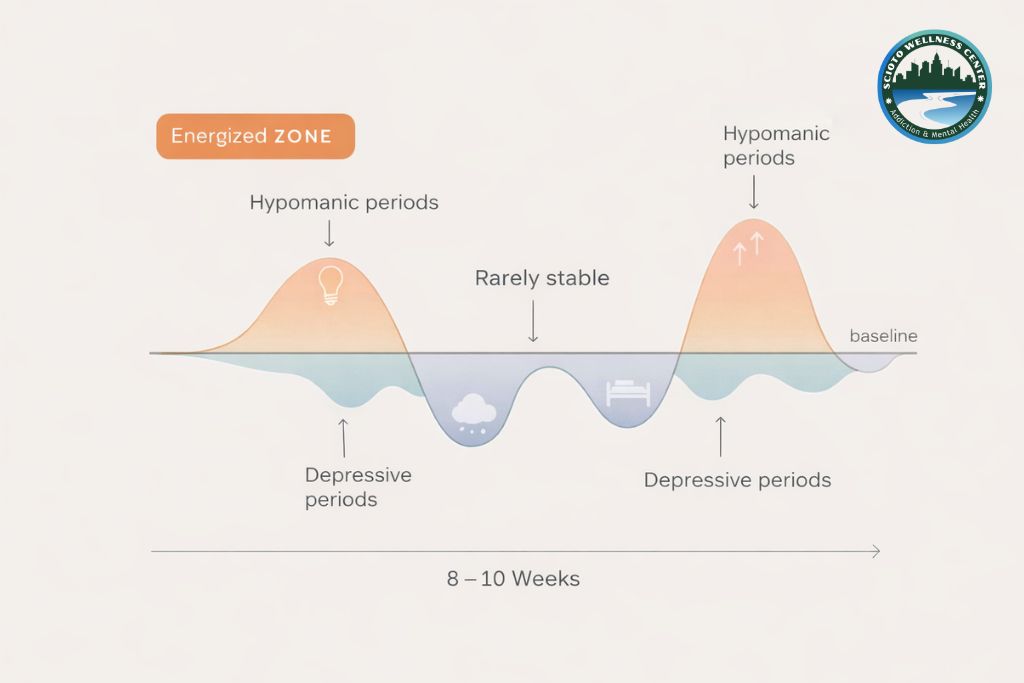
Cyclothymic disorder, also called cyclothymia, is a mood disorder characterized by chronic emotional ups and downs that don’t quite meet the criteria for bipolar disorder but are far more than ordinary mood changes. It involves frequent shifts between hypomanic symptoms (elevated mood, increased energy) and depressive symptoms (low mood, fatigue) over at least two years in adults.
Cyclothymic disorder treatment in Columbus, Ohio, focuses on helping you understand these cycles, recognize early warning signs, and develop coping strategies that reduce the impact on your relationships, work, and sense of stability.
Cyclothymia sits on the bipolar spectrum, which means it’s related to bipolar disorder but distinct in important ways. Bipolar I includes at least one manic episode (severe, often requiring hospitalization), while bipolar II includes hypomanic episodes and major depressive episodes. Cyclothymic disorder includes many periods of hypomanic and depressive symptoms, but neither reaches the full intensity required for a manic or major depressive episode.
Cyclothymia is not “mild bipolar.” It’s a distinct diagnosis with its own treatment needs. The hallmark is the chronic, persistent nature of the mood cycles rather than the severity of individual episodes.
The DSM-5 outlines specific criteria: you experience numerous periods of hypomanic and depressive symptoms for at least two years, symptoms are present more than half the time, you’re never without symptoms for more than two months at a stretch, and the symptoms cause distress or impair functioning. The key point: it’s the chronic, persistent nature of the mood cycling that defines cyclothymia.
Cyclothymic disorder affects approximately 0.4 to 1% of the population. It often begins in adolescence or early adulthood, affecting men and women equally. Research suggests that 15 to 50% of people with cyclothymia may eventually develop bipolar I or II disorder. That also means 50 to 85% do not progress. Early treatment can improve quality of life now and may reduce the risk of progression later.
Recognizing Cyclothymic Symptoms: What Mood Cycling Looks Like in Daily Life
Cyclothymia doesn’t always announce itself clearly. You might just think you’re inconsistent or unreliable. But when you step back and look at the pattern, the cycles become visible.
During hypomanic periods, you might experience elevated or irritable mood, increased energy without feeling tired, decreased need for sleep (feeling rested on four to five hours), racing thoughts, taking on multiple projects simultaneously, increased confidence, impulsive decisions, and feeling creative and inspired.
Here’s the tricky part: these symptoms often feel good. You’re not “sick” during hypomanic periods. You feel energized, capable, and inspired. That’s why cyclothymia can be hard to identify.
During depressive periods, you might experience sad or hopeless feelings, loss of interest in activities, fatigue, sleeping too much or difficulty sleeping, difficulty concentrating, negative self-talk, social withdrawal, decreased productivity, and abandoning projects started during “up” periods. These depressive symptoms don’t meet the full criteria for major depression but still significantly impact your ability to function. Many people also notice when anxiety shows up in your body during these periods—physical tension, digestive issues, or unexplained aches that mirror the emotional shifts.
What distinguishes cyclothymia from ordinary mood changes is the pattern: rapid cycling between states (days to weeks), unpredictable mood shifts, difficulty identifying external triggers, brief or nonexistent “normal” periods, a chronic pattern (at least two years), others commenting on your inconsistency, and difficulty maintaining routines due to shifting energy.
Sarah, 32, came to Scioto Wellness Center describing herself as “unreliable.” She’d commit to social plans during high-energy weeks, then cancel when depressive periods hit. At work, she’d volunteer for projects enthusiastically, then struggle to complete them. She thought she was “just flaky” until mood tracking revealed a clear cyclothymic pattern. Understanding the pattern gave her clarity and a path forward.

How Cyclothymic Disorder Differs from Other Mood Conditions
Because cyclothymia shares features with other mood disorders, it’s often misdiagnosed. Cyclothymia never includes manic episodes or major depression but involves frequent hypomanic and mild depressive symptoms in a chronic pattern. Bipolar I and II involve more severe, episodic mood changes.
Cyclothymia includes elevated mood periods, while major depressive disorder does not. Cyclothymia is chronic cycling, while major depressive disorder is episodic. Antidepressants can destabilize cyclothymia and worsen cycling. If you’ve been treated for depression and medications haven’t worked consistently, or if you’ve noticed periods where you feel “too good” between down periods, cyclothymia might be the more accurate diagnosis. Understanding how an anxiety diagnosis might be the beginning of a better life can help you see that getting the right diagnosis opens doors to effective treatment.
Cyclothymia is also often confused with borderline personality disorder because both involve emotional instability. However, cyclothymia’s mood cycles last days to weeks (not hours), aren’t triggered by interpersonal events, and involve prominent sleep and energy changes.
Everyone experiences mood changes, but cyclothymia involves a two-year pattern that impairs functioning, occurs independent of external events, involves physiological changes like sleep disruption, and follows a consistent pattern others notice.
Can Cyclothymic Disorder Turn Into Bipolar Disorder?
Research shows that 15 to 50% of people with cyclothymia eventually develop bipolar I or II disorder, which means 50 to 85% do not progress. Risk factors for progression include family history of bipolar disorder, earlier age of onset, substance use, untreated cyclothymia, major life stressors, antidepressant use without mood stabilizers, and chronic sleep deprivation.
Treating cyclothymia early may prevent progression to bipolar disorder, improve quality of life even if progression occurs, develop coping skills before severe episodes, build support systems proactively, and create mood monitoring habits.
Whether or not your cyclothymia progresses, treatment improves your current quality of life significantly. Early intervention is about managing what you’re experiencing now while potentially preventing future escalation. Our intensive outpatient program in Columbus provides structured support for mood cycle management. Many people find that IOP makes anxiety manageable one step at a time while also addressing the underlying mood instability.
Seek immediate evaluation if you notice hypomanic symptoms intensifying, depressive symptoms worsening toward suicidal thoughts, sleep loss for multiple consecutive nights, psychotic symptoms, severe impulsive decisions, increased substance use, or relationship crises due to behavior changes.
Evidence-Based Treatment for Cyclothymic Disorder
Cyclothymic disorder responds well to treatment, especially when caught early. While some people may benefit from medication, many successfully manage cyclothymia through therapy alone or with minimal medication support.
Cognitive Behavioral Therapy (CBT) is one of the most effective approaches. It helps you identify thought patterns that amplify mood swings, recognize early warning signs of cycle shifts, challenge negative thinking during depressive periods, manage impulsivity during hypomanic periods, build routine and structure, improve sleep hygiene, and develop problem-solving skills. Our approach focuses on helping you regain control of your thoughts and your life while staying true to yourself. If you’ve tried CBT before and struggled, know that CBT therapy is still worth trying with the right support and a fresh approach.
Treatment typically involves 12 to 20 sessions to see significant improvement, with ongoing maintenance as needed.

Dialectical Behavior Therapy (DBT) teaches emotional regulation skills, distress tolerance for depressive periods, mindfulness for recognizing mood shifts, interpersonal effectiveness, and “opposite action” skills. DBT is especially useful for managing impulsivity during elevated moods, emotional intensity, and relationship conflicts. Learn more about how we integrate DBT therapy techniques into treatment.
Interpersonal and Social Rhythm Therapy (IPSRT) focuses on stabilizing daily routines, regular sleep-wake schedules (critical for mood stability), consistent meal times, and managing interpersonal triggers. Irregular schedules can trigger mood episodes. IPSRT creates predictability that stabilizes biological rhythms.
Medication might be recommended when significant functional impairment exists, the risk of progression is elevated, co-occurring conditions are present, therapy alone is insufficient, or a family history of bipolar disorder exists. Common medications include mood stabilizers like lithium, lamotrigine, or valproic acid, often prescribed at lower doses than for bipolar I or II.
Antidepressants alone can trigger hypomania or worsen cycling and should only be used with mood stabilizers if needed. Many people with cyclothymia do better without antidepressants. At Scioto Wellness Center, we collaborate with psychiatrists when medication is appropriate, but many of our Columbus-area cyclothymia patients manage successfully with therapy alone.
Critical lifestyle factors can be as powerful as medication: a consistent sleep schedule (seven to nine hours nightly), regular routines, substance use management (alcohol and cannabis destabilize mood), stress management, regular social connection, and moderate exercise.
Tools and Strategies for Managing Your Mood Cycles
Mood charting is essential because it identifies your unique pattern, predicts upcoming shifts, shows treatment effectiveness, provides data for providers, and increases self-awareness. Track daily mood rating, energy level, sleep hours and quality, medications, activities, stressors, and impulsive urges.
Create a personal early warning system. Pre-hypomanic indicators include decreased sleep need, increased talking, more ideas and plans, heightened confidence, and increased spending urges. Action plan: increase structure, avoid major decisions, and contact a therapist if intensifying.
Pre-depressive indicators include increased fatigue, social withdrawal urges, negative thinking, task avoidance, and loss of interest starting. Action plan: behavioral activation, reach out to support, maintain routine, contact therapist.
Your personalized mood management plan should include your warning signs, triggers, coping strategies for elevated and low moods, emergency contacts (including Scioto Wellness Center at 888-437-1898 and crisis line 988), things that help you, and things that make it worse.
Building a Fulfilling Life While Managing Mood Cycles
Shift your perspective from “I’m broken” to “I have a manageable condition,” from “I’m unreliable” to “I’m learning to predict and manage patterns,” and from “I’ll never be stable” to “Stability looks different for me, and that’s okay.”
When talking about cyclothymia with partners and friends, explain it’s a medical condition (not a personality flaw), share your pattern, be specific about helpful support, set boundaries during vulnerable periods, and apologize for the impact without over-apologizing for having the condition. Many people discover that group therapy might be the safe place they’ve been searching for as they build their support system. In group settings, you can learn how to set boundaries that protect your progress while managing mood cycles.
Managing work with mood cycles involves choosing flexible careers when possible, building in buffer time for deadlines, not overcommitting during elevated periods, creating systems that work even during low periods, and maintaining regular schedules.
Tom, a 35-year-old graphic designer in Columbus, struggled with cyclothymia for a decade before diagnosis. Through therapy at Scioto Wellness Center, he learned to recognize his patterns, maintain strict sleep routines, and adjust his workload based on mood cycles. He now successfully runs his own design business. “I work with my cycles now instead of against them,” he says.
Cyclothymic Disorder Treatment in Columbus, Ohio
At Scioto Wellness Center, we specialize in helping people across Columbus, Hilliard, Grove City, and Dublin manage cyclothymic disorder with compassionate, evidence-based care. Our approach includes specialized training in bipolar spectrum disorders, a focus on early intervention and prevention, a combination of therapy modalities (CBT, DBT, and IPSRT), collaborative care with psychiatry when needed, and long-term support.
We offer individual therapy for mild to moderate cyclothymia with weekly sessions initially, then biweekly, focusing on pattern recognition and skill building. Our intensive outpatient program is best for more severe symptoms or recent escalation, meeting three days per week for three hours per day, including group therapy, individual sessions, and skill practice. If you’ve been in treatment before and stepped away, know that you can rejoin an intensive outpatient program without shame or judgment.
Our partial hospitalization program in Hilliard is best for significant impairment or risk of escalation, meeting five days per week for six hours per day with comprehensive programming and daily check-ins. This provides intensive support without hospitalization while maintaining your home environment. Many people worry they’re “not sick enough” for PHP, but a partial hospitalization program isn’t too much—it might be exactly right for stabilizing severe mood cycles. PHP can also serve as the bridge when home isn’t enough but full hospitalization feels unnecessary.
The treatment process includes assessment and education (weeks 1 to 2), skill building (months 1 to 3), application and refinement (months 3 to 6), and ongoing maintenance with reduced frequency sessions.
Signs It’s Time to Get Professional Support
Seek evaluation if you’re experiencing mood swings that others notice, a pattern of “up” and “down” periods lasting days to weeks, difficulty maintaining consistency, starting projects you don’t finish, fluctuating sleep patterns, impulsive decisions during energetic periods, social withdrawal during low periods, a family history of bipolar disorder, previous depression treatment that didn’t work well, or unusual reactions to antidepressants.
Don’t wait for “it to get bad enough,” a crisis, more evidence, or the “right time.” Many people with cyclothymia wait years before seeking help because they don’t think they’re “sick enough.” But you don’t need to wait until your mood cycles severely impair your life. If your mood patterns are causing you distress or affecting your relationships and functioning, you deserve support. Stop waiting for the perfect time to come back to treatment—now is the right time.
Frequently Asked Questions About Cyclothymic Disorder
Is cyclothymic disorder the same as bipolar disorder?
Cyclothymic disorder is on the bipolar spectrum but is distinct from bipolar I and II. While all three involve mood cycling, cyclothymia is characterized by chronic mood swings that are less severe than full manic or major depressive episodes but persist for at least two years.
Do I need medication for cyclothymic disorder?
Not always. Many people manage cyclothymia successfully with therapy alone, especially when they focus on CBT, DBT skills, routine stabilization, and lifestyle changes. Medication may be recommended if symptoms significantly impair functioning or if therapy alone isn’t sufficient.
Will cyclothymia turn into bipolar disorder?
Research shows that 15 to 50% of people with cyclothymia eventually develop bipolar I or II disorder, which means 50 to 85% do not progress. Early treatment may reduce the risk of progression.
Can I work with cyclothymic disorder?
Yes. Most people with cyclothymia maintain employment. Strategies like maintaining consistent routines, building in flexibility during mood shifts, and developing strong coping skills can help you maintain consistency at work.
Where can I get cyclothymic disorder treatment in Columbus?
Scioto Wellness Center in Hilliard specializes in mood disorders, including cyclothymic disorder. We offer individual therapy, intensive outpatient programs, and partial hospitalization programs. We serve Columbus, Hilliard, Grove City, Dublin, and surrounding Central Ohio communities.
Get Help for Cyclothymic Disorder in Columbus Today
If you’re ready to understand your mood patterns and build the stability you’ve been searching for, support is available. You don’t have to wait for a crisis to reach out.
Call (888) 437-1898 to speak with a mood disorder specialist, verify your insurance online, or schedule a free consultation. We offer confidential consultations, accept most insurance plans, provide evening and weekend appointments, and serve Columbus, Hilliard, Grove City, Dublin, and all of Franklin County.
If you’ve spent years feeling like you’re on an internal rollercoaster, never quite knowing which version of yourself will show up each week, you’re not alone, and more importantly, you’re not stuck. Cyclothymic disorder is real, diagnosable, and highly treatable.
The unpredictability that has defined your life doesn’t have to continue. With proper treatment, most people with cyclothymia learn to recognize their patterns, manage their mood cycles, and build the consistent, stable life they’ve been seeking.
At Scioto Wellness Center in Columbus, we’ve helped countless Ohio residents understand and manage their cyclothymic disorder. Your mood cycles have a pattern, and that pattern can be managed. Take the first step toward stability today.